 By OUR CORRESPONDENT
Masirah – Masirah Bay, stretching between Masirah Island and the Bar Al Hikman peninsula, has been highlighted as one of Oman’s richest and most ecologically significant marine environments, supporting rare wildlife, globally important habitats and one of the world’s most isolated whale populations.
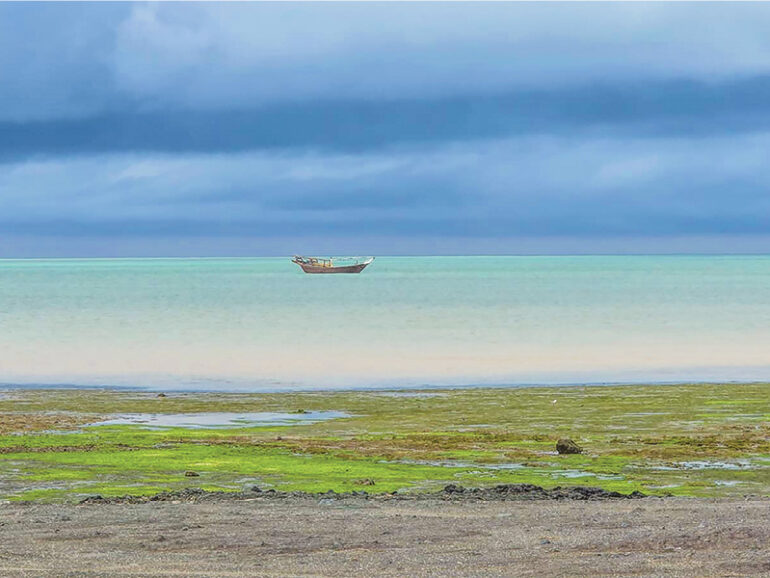
According to the Environment Authority, the bay hosts an exceptional diversity of marine and coastal ecosystems, including coral reefs, seagrass meadows, mudflats, wetlands and shallow lagoons that provide vital breeding, feeding and nursery grounds for countless marine species.
Dr Aziza bint Saud Adhoobi, an environmental expert at the Environment Authority, said the area is among the most important environmental sites in Oman and the wider region due to its remarkable biodiversity and variety of habitats.
“The bay’s extensive seagrass beds and shallow waters serve as natural nurseries for fish and other marine organisms, while also supporting important populations of sea turtles,” she said.
The waters of Masirah Bay are a critical feeding ground for green, hawksbill and olive ridley turtles, which depend on the area’s rich seagrass resources. The bay also contains one of Oman’s largest and most productive marine habitats, helping sustain local fisheries and broader marine ecosystems.
Among the area’s most remarkable features is a vast coral formation in Bar Al Hikman believed to be the largest single-species coral aggregation in the world. Dominated by cabbage coral (Montipora species), the reef system is surrounded by more than 60 species of hard corals, creating an important refuge for marine life.
Masirah Bay is also internationally recognised as a key habitat for the endangered Arabian Sea humpback whale. Scientists estimate that fewer than 100 of these whales remain, making them one of the rarest whale populations on the planet. Genetic studies indicate that this population has been isolated from other humpback whales for nearly 70,000 years.
The bay’s importance extends to bird conservation as well. Located along the West Asia-East Africa migratory flyway, its mudflats and wetlands attract close to one million migratory birds each year. Bar Al Hikman alone hosts more than 500,000 birds annually and is considered among the most significant wintering grounds for waterbirds in western Asia.
Officials say the area’s natural beauty and extraordinary biodiversity also position it as a leading destination for eco-tourism. Opportunities for whale and dolphin watching, birdwatching, diving and marine exploration continue to attract growing interest from nature enthusiasts and researchers alike.
The Environment Authority stressed that protecting Masirah Bay remains a national priority, describing the area as an environmental, economic and cultural asset that must be preserved for future generations.
© 2021 Apex Press and Publishing. All Rights Reserved. Powered by Mesdac