
 By MOHAMMED TAHA
Muscat – Oman’s transition to cleaner transport is gaining momentum with the number of registered electric vehicles (EVs) surpassing 5,900 in the first half of 2026 as the sultanate rolls out a series of projects to cut emissions and advance its net-zero ambitions.
From expanding EV charging infrastructure and piloting electric-bike deliveries to developing green ports and launching a large-scale ship recycling facility, the Ministry of Transport, Communications and Information Technology (MTCIT) is accelerating efforts to decarbonise the transport and logistics sector.
In an exclusive interview with Muscat Daily, Abdullah bin Ali Al Busaidi, Director General of Oman Logistics Centre and a member of the national net-zero team, said transport is emerging as a key pillar of Oman’s climate strategy.
“The ministry is working on multiple fronts, including expanding EV adoption, developing charging infrastructure, promoting low-emission transport and improving logistics efficiency through smart technologies,” he said.

Under Oman’s National Net Zero Strategy, carbon emissions are targeted to fall by 3% by 2030 and 34% by 2040, before reaching net-zero by 2050.
Among the most significant projects is a green ship recycling facility planned at Khatmat Malaha in North Batinah. Designed to meet the highest international environmental standards, the facility is expected to recycle up to 70 ships a year and produce nearly 2mn tonnes of low-carbon steel annually, while creating around 2,000 direct and indirect jobs.
Al Busaidi said the project would strengthen industries linked to steel, marine services and logistics, promote the circular economy and reduce the environmental impact of conventional ship dismantling.
MTCIT is also working to make Oman’s ports cleaner by electrifying equipment, exploring shore-power systems that enable ships to use onshore electricity while berthed and integrating renewable energy into port operations.
On the urban mobility front, a pilot programme using electric bikes for deliveries has shown promising results, cutting fuel consumption and emissions while improving efficiency in congested areas.
Following the successful trial, authorities are considering expanding the initiative to express delivery and wider city logistics services.
To support rising EV adoption, Oman plans to establish specialised maintenance centres and spare-parts facilities, with the related tender currently under technical and financial evaluation.
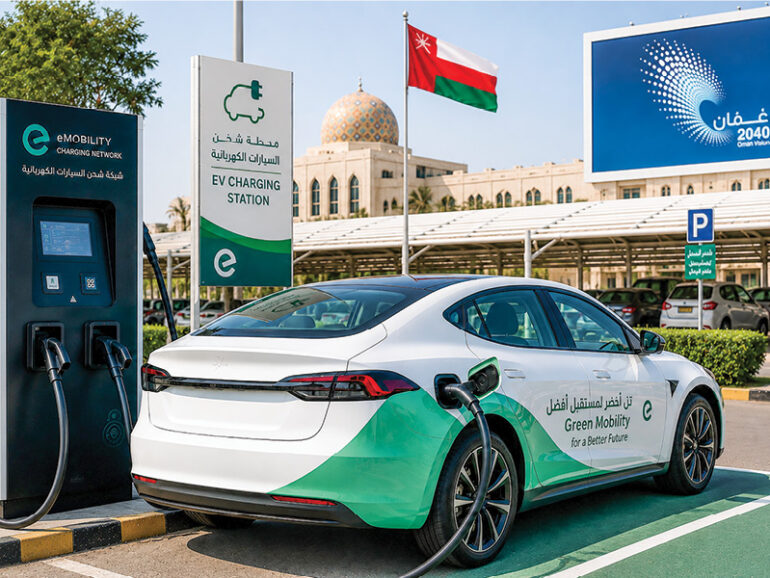
Meanwhile, the national charging network has grown to more than 160 charging points, with plans to increase that figure to 350 by 2027. New stations will be installed along highways, in commercial centres, tourist destinations and on roads linking governorates.
Officials credit the rapid increase in EV ownership to improved charging infrastructure, growing public awareness and the availability of more electric models in the local market.
Government entities are also preparing to gradually convert official vehicle fleets to electric power, beginning with vehicles used for day-to-day urban operations.
“The transition of government fleets to EVs is an important step in reducing emissions and advancing Oman’s green development goals,” Al Busaidi said.
Key Highlights
• 5,900 registered EVs
• 160 public charging points
• 350 charging stations targeted by 2027
• 70 ships to be recycled annually
© 2021 Apex Press and Publishing. All Rights Reserved. Powered by Mesdac