 By OUR CORRESPONDENT
Muscat – Oman-founded carbon removal company 44.01 has secured US$11.7mn in carbon-removal offtake agreements from the US-based Frontier to remove and permanently store 20,932 tonnes of carbon dioxide between 2028 and 2031.
The deal marks Frontier’s first purchase using in-situ mineralisation, a process that converts carbon dioxide into solid minerals underground.
“This agreement marks an important step for 44.01: moving our technology from demonstration to commercial deployment,” said Talal Hasan, Chief Executive of 44.01. “Our focus is now on delivering at commercial scale, continuously improving performance and driving down costs, so that more customers can benefit from this technology.”
Frontier has facilitated purchases on behalf of companies including Stripe, Google and Shopify, alongside Autodesk, H&M Group and Workday. The buyers are supporting the next stage of the technology: moving beyond short-duration pilot injections to continuous operations over several years.
Ella Hughes, technical programme manager for carbon removal at Google, confirmed in a social media post that “Google is partnering with 44.01 via Frontier to advance in-situ mineralisation (ISM).”
Hannah Bebbington Valori, head of Frontier, said, “Where we can store CO₂ shouldn’t limit where we can remove it. In-situ mineralisation could expand the storage map, making permanent storage practical in places conventional storage can’t economically reach. That’s why we’re purchasing from 44.01: to prove out the technology and ready it for commercial scale.”
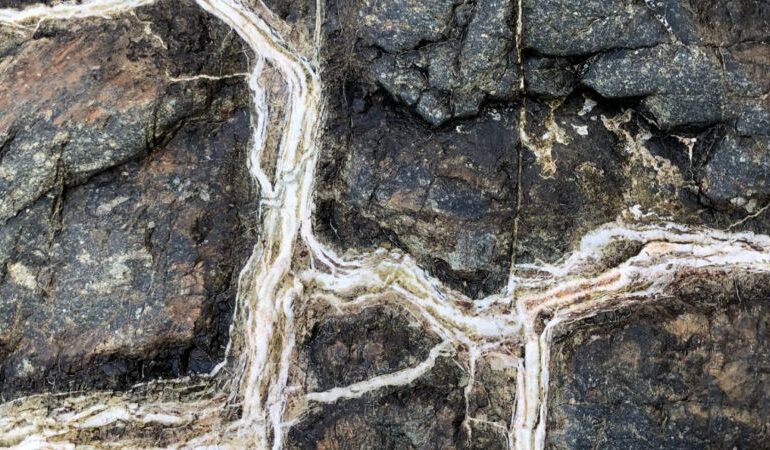
The process begins by dissolving captured CO₂ in water. The resulting solution is injected through wells into peridotite, a naturally occurring, magnesium-rich rock that reacts with the dissolved carbon. This reaction forms stable solid carbonates, locking the carbon underground.
According to 44.01, mineralisation can occur within one to three years. The approach could reduce reliance on long-distance pipelines and shipping where suitable reactive rocks lie close to industrial emission sources.
Conventional geological storage typically involves injecting compressed CO₂ into deep underground formations. In-situ mineralisation offers another option in locations where suitable sedimentary basins are unavailable or too costly to reach.
The technology has particular relevance to Oman. 44.01 says it has demonstrated its process in Oman and the United Arab Emirates, where extensive exposed peridotite formations provide suitable geology. The company also identifies Oman as a country where reactive rocks could offer additional storage opportunities.
The Frontier-backed project, however, is intended to demonstrate continuous operation and generate data on injection rates, water requirements and operating costs. It will help determine whether the approach can be scaled economically.
The results could help establish whether turning carbon into rock can become a practical tool for permanent carbon removal and for reducing emissions from hard-to-abate industries such as cement and steel.
© 2021 Apex Press and Publishing. All Rights Reserved. Powered by Mesdac