 By OUR CORRESPONDENT
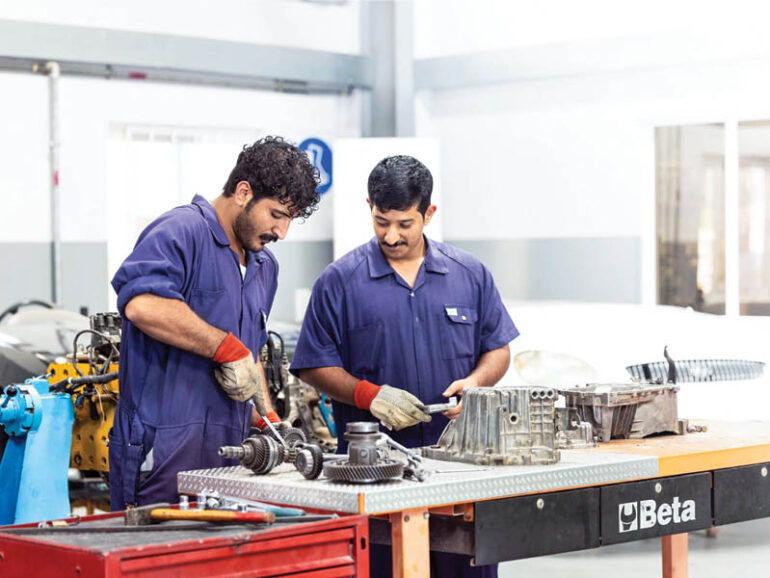
Muscat – About RO20mn has been allocated to develop vocational colleges between 2026 and 2030 as Oman seeks to strengthen training infrastructure and equip nationals with skills needed by a changing labour market.
The investment is part of a wider Ministry of Labour drive to improve vocational education, professional accreditation and workforce competencies while bringing training programmes closer to the requirements of key economic sectors.
Vocational colleges conducted 71 training programmes and courses during the first half of 2026, benefiting 1,062 people, according to ministry figures.
The colleges also signed five cooperation agreements with relevant organisations and adopted six institutional policies aimed at improving the training environment, building partnerships and raising programme standards.
The ministry said vocational colleges were working to develop their training and qualification systems and improve their ability to respond to current and future labour market requirements.
The push comes as Oman places greater emphasis on vocational and professional skills alongside conventional academic education to prepare young people for employment and emerging occupations.
Professional accreditation has become another major element of that effort.
The ministry issued 83,000 professional practice licences in the first half of the year and accredited 350 professions under the professional accreditation system.
The system is intended to regulate professional practices, ensure compliance with required standards and improve competency levels across different occupations.
Work is also progressing on linking government jobs to defined skills and competencies.
A total of 13,246 jobs have been linked to the National Competency Framework, which has been implemented in 24 government entities. Meanwhile, a human resources matrix has been introduced across 63 entities.
The ministry said the approach would make workforce planning more closely tied to the actual capabilities required for individual positions, while helping authorities identify training and qualification needs.
Its broader human resource development programme also covered organisational restructuring, job classification, administrative monitoring, quality assurance and the development of private training institutions.
During the first six months of 2026, authorities processed 1,462 requests involving appointments, status adjustments and service transfers, alongside 1,014 job classification transactions and 423 employment status regularisation cases.
Another 66 organisational studies and projects were carried out to improve government structures and job classification systems.
Technology is also being incorporated into the reform programme. The ministry said engagement with an artificial intelligence pilot application reached 70%, involving 350 employees, as authorities explore the use of AI to streamline procedures and improve efficiency.
Innovation and change management practices have been introduced across 45 government entities.
Further reforms are under way in the private training sector, including regulatory frameworks designed to ensure courses better reflect labour market requirements.
The project to develop the private training system has reached 23% completion, while an initiative aimed at improving the investment environment in the sector is 10% complete.
The ministry is also working on a Professional Diploma Credit Calculation project intended to strengthen confidence in training programmes and improve the quality and recognition of their outcomes.
© 2021 Apex Press and Publishing. All Rights Reserved. Powered by Mesdac