 By MUSCAT DAILY CORRESPONDENT
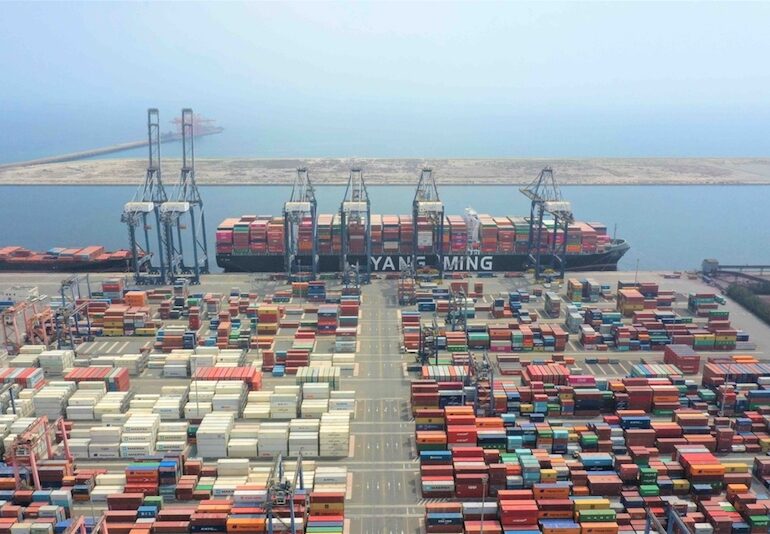
Muscat- Oman’s non-oil exports of Omani origin rose 11.4 per cent to approximately RO3.6 billion by the end of June 2026, as national products expanded their reach to more than 130 global markets.
The growth reflects the increasing competitiveness and diversification of Omani products, supported by efforts to open new markets, strengthen exporters’ readiness and improve access to international buyers.
Re-exports also recorded strong growth of 20 per cent during the first half of 2026, highlighting Oman’s growing role as a regional trade and logistics hub.
H.E. Eng. Ghalib bin Said Al Mamari, Undersecretary of the Ministry of Commerce, Industry and Investment Promotion for Commerce and Industry, said Oman is working to build a base of exporters capable of competing and maintaining a sustainable presence in international markets.
According to data from the National Centre for Statistics and Information, non-oil exports of Omani origin reached around RO3.6 billion by the end of June, compared with approximately RO3.3 billion during the same period in 2025.
Al Mamari said growth was concentrated in the second quarter. Exports stood at around RO1.6 billion in the first quarter, broadly in line with the corresponding period of 2025, while cumulative growth by the end of May was only 1.5 per cent.
Exports then accelerated in the second quarter, reaching approximately RO2 billion.
Total merchandise exports increased 15.3 per cent by the end of June to around RO13.2 billion, while re-exports rose 20 per cent, an increase of approximately RO163 million. The trade surplus also increased 51 per cent to around RO4.7 billion.
The performance supports Oman’s non-oil export development strategy, which focuses on diversifying target markets, strengthening exporters’ capabilities and increasing the presence of Omani products overseas.
More than 130 markets
Omani products now reach more than 130 countries, supported by product quality and diversity, Oman’s strategic location, its ports and logistics infrastructure, and programmes designed to help national companies enter new markets.
Al Mamari said the objective is not simply to increase export volumes, but to strengthen the readiness of Omani companies and make exports a sustainable component of their growth and expansion plans.
Through Oman Exports, companies receive market information and data, technical guidance, capacity-building support and promotional opportunities, while being connected with importers and distributors.
The platform also helps exporters understand standards, technical requirements, certificates of conformity and other market-access conditions.
Exports diversify
Mubarak bin Mohammed Al Dohani, Director-General of Planning at MoCIIP and the ministry’s official spokesperson, said non-oil exports amounted to RO1.611 billion in the first quarter of 2026, equivalent to 15.7 per cent of GDP at current prices.
The commodity structure was diversified across five main groups: mineral products; base metals and articles thereof; chemical products; plastics, rubber and articles thereof; and live animals and animal products, led by fisheries products.
Chemical products recorded the highest growth rate, rising 17 per cent to RO216 million, according to NCSI data through the first quarter. Base metals and articles thereof increased 10.8 per cent to RO376 million, while exports of live animals and animal products rose 6 per cent to RO104 million.
Al Dohani said national companies were showing greater awareness of international market requirements and making increased use of market information and data when selecting export destinations.
Omani participation in international exhibitions and trade events has also become an important tool for reaching buyers and developing distribution networks.
During 2025, Oman participated in 17 local and international exhibitions and trade events under the umbrella of the Omani Products Promotion Committee (OPEX), resulting in deals, distribution and agency agreements and other business opportunities.
New destinations
Faris bin Nasser Al Farsi, Economic Expert at MoCIIP, said Omani companies are expanding beyond traditional markets into new destinations, including Iraq, East Africa and several Asian markets.
He said companies are increasingly seeking direct relationships with importers and distribution and agency agreements, rather than relying solely on individual transactions.
“Oman Exports” supports this expansion by providing market reports, export guides and information on documentation and logistics, while connecting companies with international buyers and importers.
Food and beverages, manufacturing, mineral products, electrical equipment and machinery, construction materials, plastics, chemicals and Omani-origin personal care products are among the sectors offering growing opportunities.
Companies widen their reach
Eng. Salim bin Nasser Al Bartamani, CEO of Areej Vegetable Oils and Derivatives, said the company’s products now reach more than 40 countries.
Its production capacity has increased from around 60,000 metric tonnes two decades ago to nearly 240,000 metric tonnes today, an increase of approximately 300 per cent.
The company’s sales structure has also changed significantly. While the domestic market once accounted for around 80 per cent of production and exports for 20 per cent, the situation has almost reversed, with about 80 per cent of production now destined for international markets.
Al Bartamani said Oman Exports had helped the company access market information, identify export opportunities and explore non-traditional destinations.
Fahmi bin Said Al Hinai, Executive Director of Poly Products LLC, said the initiative had helped strengthen the company’s export activity and connect it with new markets and buyers.
The company has accessed markets including Armenia and Georgia, as well as buyers and distributors in Africa and East Asia, and is looking to enter additional markets, including China.
Al Hinai said expanding the global presence of Omani products requires continued cooperation between companies, government entities, the logistics sector and financing, insurance and promotion institutions.
With non-oil exports and re-exports continuing to grow and Omani companies entering new destinations, Oman is strengthening its position as a regional trade and logistics hub while building a broader and more sustainable presence for national products in international markets.
© 2021 Apex Press and Publishing. All Rights Reserved. Powered by Mesdac