 By OUR CORRESPONDENT
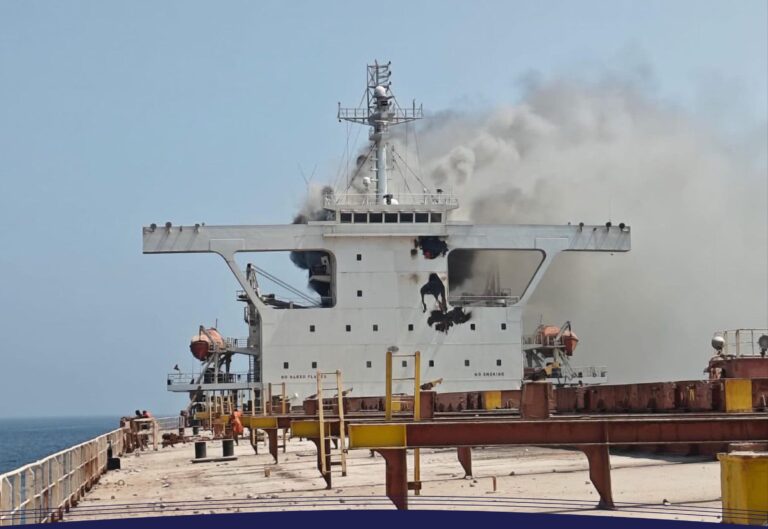
Muscat – Oman is intensifying efforts to contain oil leaking from the grounded tanker Caroline Bezengi off the Hallaniyat Islands, as the latest official monitoring detected pollution across about 390sq km and technical teams work to secure the vessel and prepare for the safe transfer of its cargo.
The Environment Authority (EA) said satellite analysis showed the slick extending northeast from the islands towards the mainland coast, reaching within about 7km at its closest point. Its observed track stretches 449km.
Environmental modelling indicates the pollution could advance another 121km northeast over 48 hours, although the authority stressed that this is a forecast rather than an actual observation and could change with winds, currents and sea conditions.
The thickest portions may move towards Ras Madrakah, prompting closer monitoring of sensitive coastal and marine habitats.
EA stressed that the geographical area covered by a slick cannot be translated directly into the volume of oil spilled. Its shape and extent can change as oil disperses under the influence of winds, waves and currents.
Dr Abdullah bin Ali Al Amri, Chairman of EA, told Oman TV that no oil slick had so far been observed reaching Oman’s mainland beaches.
“So far, the direct impact is limited and confined to Qibliyah Island, with no environmental disaster occurring outside this scope,” he said.
Khareef complicates salvage
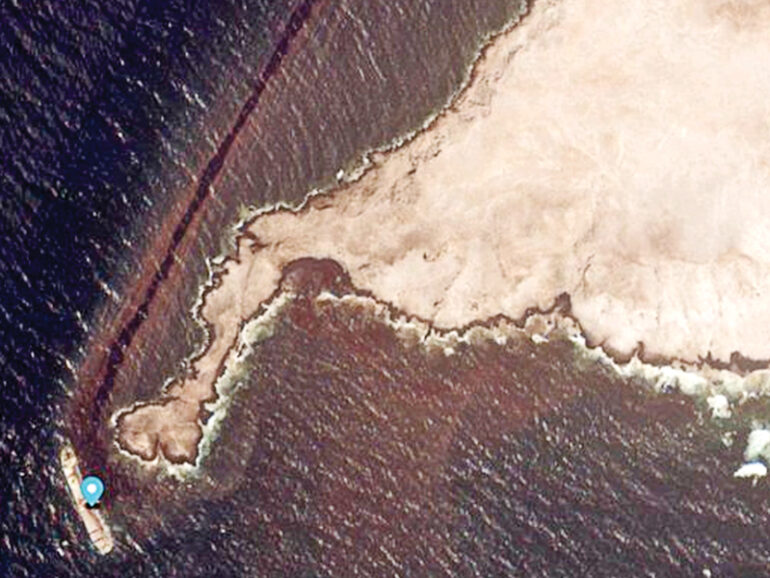
The tanker suffered an incident outside Omani waters on June 6 before eventually grounding on a rocky ledge off Qibliyah Island on June 21.
Salvage operations have faced difficult khareef conditions, with waves reaching 4m and winds of 35-40 knots. Al Amri said the same conditions that complicated intervention had also helped push and disperse oil away from the mainland coastline.
Localised leaks are being tackled using floating containment booms and specialised absorbent material. Chemical dispersants have not been used because of high waves, strong currents and the vessel’s location within a natural reserve.
Mohammed bin Abdullah Al Rawahi, Director General of Maritime Affairs at the Ministry of Transport, Communications and Information Technology, said the immediate priority was containing further pollution and securing the tanker.
“The priority at the current stage is to reduce the pollution and address the source, and to secure the ship and transport its oil cargo with the highest possible levels of safety,” he said.
Technical teams, supported by a specialised company, are inspecting the hull, identifying leak sources and developing solutions for transferring the remaining cargo before eventually salvaging the vessel.
Aircraft, helicopters, satellite imagery, diving operations, field surveys and models updated regularly are being used to track the spill and determine which marine and coastal areas require priority protection.
In the meanwhile, the National Oil Spill Contingency Plan has been raised from Level 1 to Level 2, with civilian and military agencies involved in the response.
© 2021 Apex Press and Publishing. All Rights Reserved. Powered by Mesdac