
 By OUR CORRESPONDENT
Muscat – Oman has committed to potentially reducing greenhouse gas emissions by 33% by 2035, under a new climate plan submitted to the United Nations that also outlines measures to protect the country from heat, water scarcity, cyclones and rising sea levels.
The Environment Authority submitted Oman’s Third Nationally Determined Contribution, or NDC 3.0, to the Secretariat of the United Nations Framework Convention on Climate Change as part of its obligations under the Paris Agreement.
The plan replaces the earlier business-as-usual approach with an absolute target based on emissions recorded in 2024, when Oman produced an estimated 93.6mn tonnes of carbon dioxide equivalent.
Oman will seek to cut emissions by 7% unconditionally, while a further 26% reduction depends on international finance, technology transfer and capacity-building support. The combined 33% target is higher than the 21% commitment in the updated second NDC.
Energy accounted for 79.6mn tonnes, or more than 85% of national emissions in 2024. Industrial processes produced 10.5mn tonnes, followed by agriculture, forestry and land use at 1.8mn tonnes and waste at 1.7mn tonnes.
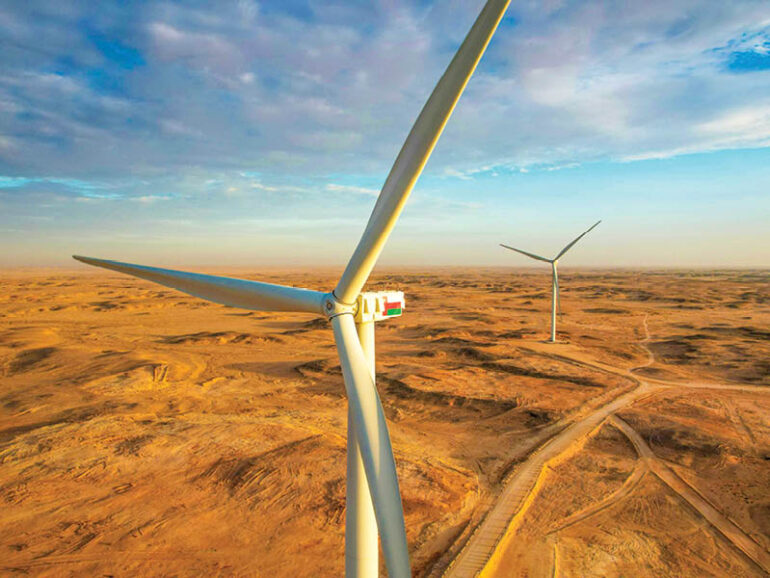
The reduction strategy includes expanding solar and wind power, improving energy efficiency, shifting towards electric vehicles and public transport, recovering flare gas and increasing natural carbon sinks.
Oman also plans the gradual use of carbon capture, utilisation and storage in refineries and heavy industries, while promoting hydrogen, biofuels, waste-to-energy projects and methane recovery from landfills.
The plan estimates that implementing the full mitigation programme between 2026 and 2035 will require US$31.05bn in capital investment and could cut emissions by about 30.4mn tonnes annually. Energy-related measures account for US$27.62bn of the requirement.
Beyond emissions, the document warns that Oman remains highly exposed to climate risks because of its arid conditions, limited freshwater resources and 3,165km coastline.
Average temperatures increased by about 0.4°C per decade between 1980 and 2013, while the number of heatwave days could rise 20% to 40% by 2050 under a high-emissions scenario.
Without stronger action, climate-related extreme events could cause economic losses of about US$13.14bn by 2040, including US$9bn in infrastructure damage. Separate cumulative losses to gross domestic product could reach US$72bn.
Adaptation priorities cover water, agriculture, fisheries, tourism, public health, infrastructure and coastal areas, with greater use of early warning systems, flood protection, climate-resilient planning and nature-based solutions.
© 2021 Apex Press and Publishing. All Rights Reserved. Powered by Mesdac