 By HUBERT VAZ
OBITUARY – Nadhira Al Harthy, never measured success by the mountains she conquered, but by the barriers she broke for others. In life, and in death, she remains one of Oman’s greatest trailblazers
Her indomitable spirit and her insatiable quest for adventure took her to many peaks, yet kept her core persona grounded in humility. There are people who spend a lifetime searching for their purpose. Nadhira Al Harthy found hers on the side of a mountain.
She discovered it in thin air, where every breath demands effort and every step requires resolve. She found it on icy ridges where fear and determination walk side by side, and where turning back is often the wiser choice. For Nadhira, however, mountains were never simply places to conquer. They were places that revealed character.
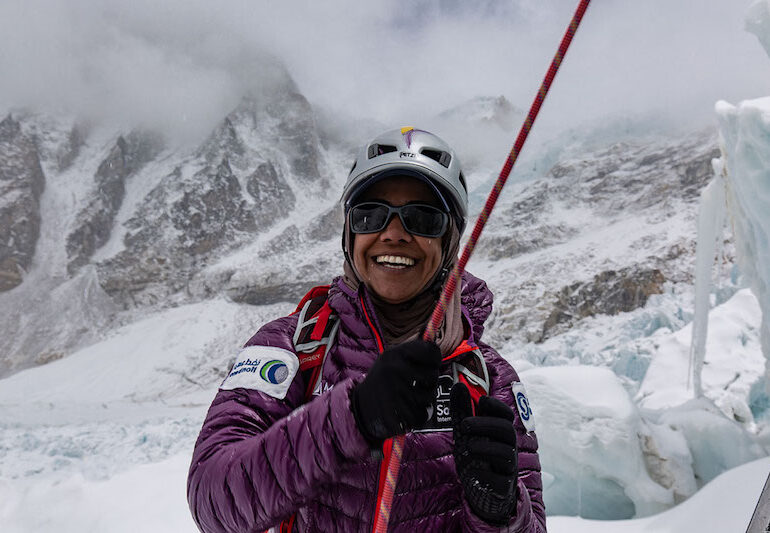
I remember contacting her for comments when she was midway on her climb to Mt Everest. “Wait,” she said, “Let me complete…what if I do not return.” Those words ring in my years now. Nadhira successfully reached the summit of Mt Everest and gave the first ever interview following her achievement during her descent, but now it is clear, that in every expedition she was fully aware of the fact that it could be her last if destiny desired so.
That is why news of Nadhira’s death in an avalanche on Pakistan’s Broad Peak has resonated far beyond the mountaineering community. Oman has not merely lost its first woman to stand atop Mount Everest. It has lost a pioneer whose life became a lesson in courage, perseverance and quiet leadership.
Nadhira represented something larger than sport. She represented possibility in a country like Oman where women over the past few decades have still been finding their feet and venturing into male bastions.
Long before photographs of her standing on Himalayan summits became symbols of national pride, she was a geography teacher fascinated by landscapes she had only studied in books. Her professional life was rooted in education and public service, eventually serving in senior leadership within the Ministry of Education. And she believed learning did not end in the classroom.
Failure, her first teacher
The defining moment of her life was not reaching the summit of Everest. It was failing to reach the summit of Kilimanjaro.
In 2015, while accompanying students on an educational expedition in Tanzania, altitude sickness forced her to abandon her attempt. Many climbers experience failure on mountains and only a few allow failure to redefine them. Nadhira did.
She returned home determined to understand why her body had failed and what her mind still needed to learn. She immersed herself in endurance training, studied high-altitude climbing, strengthened herself physically and mentally, and slowly built the foundation for dreams that once seemed unrealistic.
Nadhira never portrayed success as talent. She treated it as preparation meeting persistence. When she reached the summit of Mount Everest in May 2019, history recorded a simple fact – the first Omani woman to stand on the highest point on Earth. Her achievement altered the way many Omanis viewed adventure, endurance sport, and women’s participation in fields long dominated by men.
She climbed carrying not just the Omani flag but also carried expectations. In interviews after Everest, she consistently redirected attention away from personal glory and spoke instead about representing her country, encouraging young people to challenge themselves and proving that determination mattered more than circumstance.
For many climbers, Everest is the ultimate destination. For Nadhira, it became a starting point. Having reached the world’s highest mountain, she could easily have settled into the role of motivational speaker or national sporting icon. Instead, she chose to return to the mountains again and again.
She sought out peaks that tested technique as much as endurance.
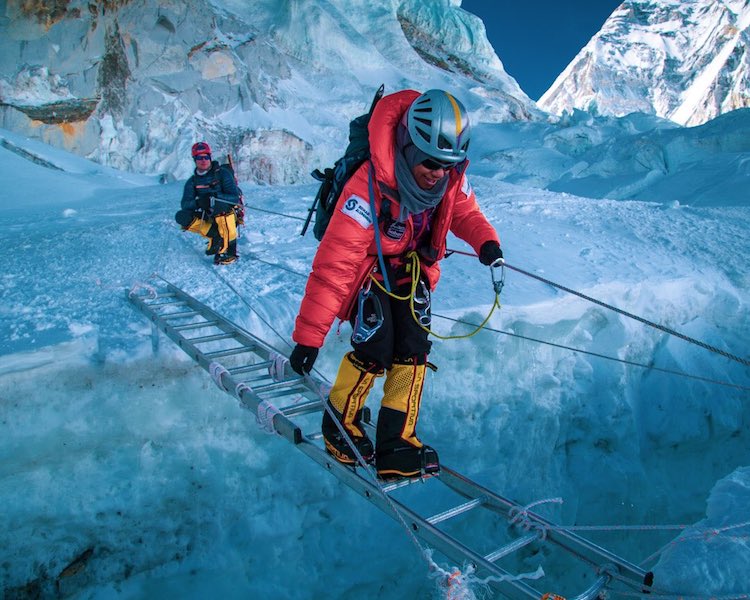
She returned to Ama Dablam after an earlier unsuccessful attempt and became the first Arab woman to reach its summit. She climbed Manaslu, one of the world’s fourteen eight-thousanders. She conquered K2, regarded by many mountaineers as even more demanding than Everest because of its steep terrain, unpredictable weather and technical challenges. Then came Nanga Parbat, a mountain so unforgiving that it earned the nickname ‘The Killer Mountain’, where she became the first Omani to stand on its summit.
Every climb expanded her legacy but it also reinforced something else. She was never chasing records for their own sake, she was chasing growth.
Strength wrapped in humility
Those who followed Nadhira’s journey often noticed a striking contrast. Her achievements were extraordinary but her personality remained remarkably understated. She did not cultivate the image of an invincible adventurer. Instead, she spoke openly about difficult expeditions, failed attempts, and the importance of respecting nature.
She understood that mountains never belonged to climbers. Climbers were merely temporary visitors. And it is that humility which earned her respect within the international climbing community while also making her approachable at home.
Young athletes saw someone who looked like them, spoke like them and came from the same schools and workplaces they did. She wasn’t born in the Alps or the Himalayas. She came from Oman, trained largely in a country without towering snow-covered peaks, and still reached the world’s highest mountains through discipline and relentless preparation. In many ways, that made her accomplishments even more remarkable.
A different kind of leadership
Leadership is often associated with authority. Nadhira practised a quieter version, she led by example. Every expedition demonstrated that meaningful achievements rarely happen overnight. Behind every summit photograph were months of conditioning, planning, fundraising, logistics, weather delays and repeated setbacks invisible to the public.
Her story challenged another misconception – that courage means being fearless. Real courage, as she demonstrated repeatedly, is acknowledging risk while deciding that the goal remains worth pursuing. That mindset influenced not only aspiring climbers but educators, professionals and young Omanis searching for confidence in entirely different fields.
Beyond the mountains
Although climbing made her internationally known, it never became her only identity. She remained committed to education, mentoring and public engagement. Through talks, workshops and community events, she encouraged people to embrace challenges that lay outside their comfort zones.
She frequently reminded audiences that the greatest obstacles are often internal rather than external – a philosophy that resonated because she had lived it herself.
The fatal peak
Broad Peak, rising above Pakistan’s Karakoram range, became the final mountain of her remarkable journey. The avalanche that claimed her life may have brought her mountaineering career to a grinding halt but it did not put an end to her exhortation to the youth in Oman –
Many youngsters will fall in her footsteps, yet she remains the inspiring force that made them fasten their boots, their gear as well a their spirits.
Nadhira transformed the image of what an Omani woman could achieve on the world stage. She inspired classrooms, encouraged athletes, elevated her country’s profile in international mountaineering and demonstrated that persistence is often more powerful than natural ability. By that standard, Nadhira Al Harthy reached heights that no avalanche can erase.
Milestones
© 2021 Apex Press and Publishing. All Rights Reserved. Powered by Mesdac