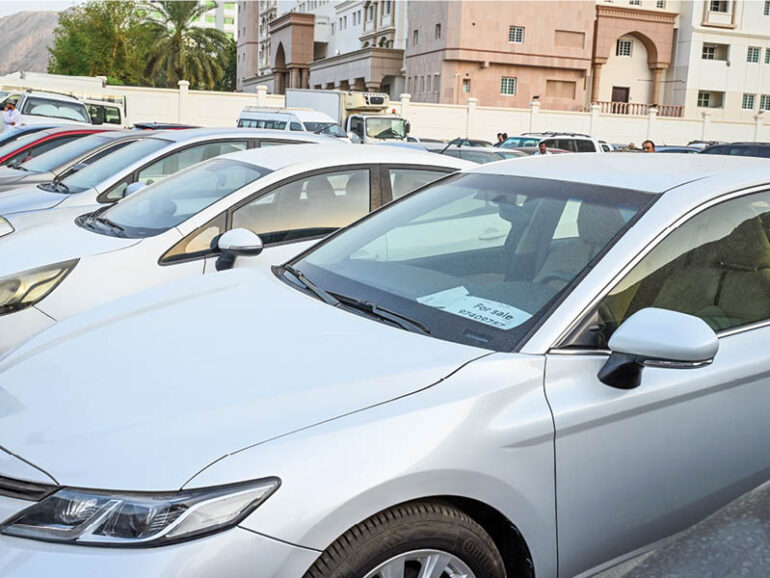
Muscat – Rising prices of new cars are driving more consumers in Oman towards imported vehicles that have been repaired and returned to the road, reshaping the country’s automotive market and prompting debate over safety, quality and long-term value.
Importers say the appeal is straightforward: buyers can often purchase a repaired imported vehicle for less than half the price of an equivalent new model while gaining access to higher specifications that may not be available in GCC versions.
Salem Al Salmi, a vehicle importer, said most imported cars in Oman originate from the United States, Japan and South Korea, with US vehicles accounting for the largest share. Many of these cars have been involved in accidents, although the extent of the damage varies widely.
“Some vehicles have only minor cosmetic damage, while others require more extensive repairs,” he said, adding that severely damaged vehicles are usually dismantled for spare parts rather than restored.
According to Al Salmi, buyers who source vehicles directly from overseas and manage the repairs themselves can later sell them for a profit before moving on to higher-value vehicles.
To address safety concerns, Al Salmi said international auction platforms provide detailed inspection reports and photographs before purchase. He shares these reports with customers and uses only genuine replacement parts sourced through authorised dealers in Oman, while also providing invoices for all parts used during repairs.
For buyer Yasser Al Gharibi, the decision was based on economics rather than sentiment.
He said buying a new vehicle results in immediate depreciation, whereas importing a repaired vehicle allowed him to purchase a model with better equipment and advanced technology while saving around RO4,000.
Drawing on his background in mechatronics, Al Gharibi carried out detailed technical inspections and electronic diagnostics before completing the purchase. He claimed he encountered no significant mechanical or electronic faults apart from minor adjustments to suit Oman’s climate.
“If I had to make the decision again, I would choose an imported vehicle without hesitation,” he said.
Authorised dealerships, however, argue that the higher price of GCC-specification vehicles reflects more than the cost of the vehicle itself.
Ahmed Al Rawahi, sales manager at an authorised dealership, and Salah Al Balushi, marketing manager at another dealership, said GCC models are specifically engineered for the Gulf’s extreme temperatures, with engines, cooling systems and paint designed for long-term durability.
They added that GCC-specification vehicles comply with Royal Oman Police safety requirements, feature comprehensive airbag systems, and are backed by manufacturer warranties of up to ten years, together with genuine spare parts and certified servicing.
As repaired imported vehicles become more common on Oman’s roads, consumers are increasingly weighing lower purchase prices against the benefits of manufacturer-backed warranties, regional safety standards and long-term after-sales support.
Contributed by Yousuf Al Gharibi
© 2021 Apex Press and Publishing. All Rights Reserved. Powered by Mesdac