
By Majeed bin Abdullah Al Asfoor
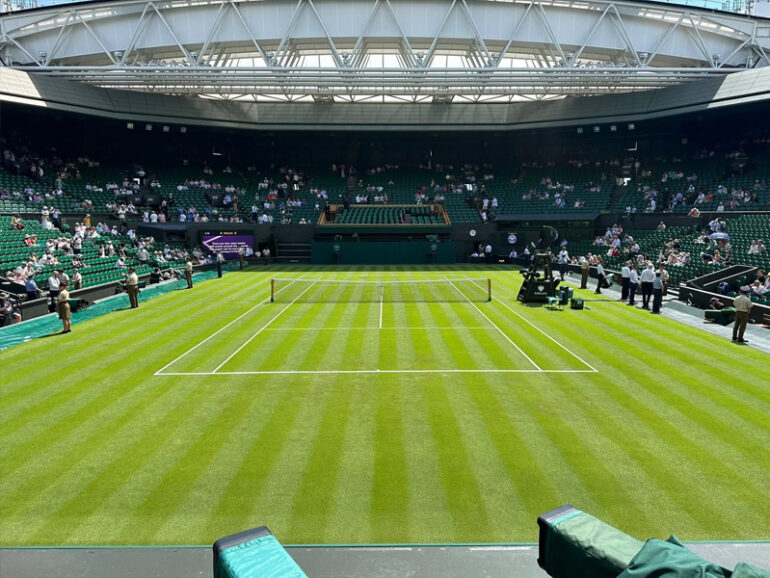
Muscat – My first visit to Wimbledon in the summer of 1977 remains vivid. Walking through the gates of the All England Club, I felt I was entering more than a tennis tournament. It was a place where history, tradition and excellence lived together.
The immaculate grass courts, the quiet anticipation of the crowd, and the perfect organisation left a lasting impression. I was fortunate to watch the men’s final between Björn Borg and Jimmy Connors, a match played at the very highest level. Yet it was Wimbledon itself that stayed with me more than the result.
That day showed me Wimbledon is about more than sport. It represents respect, discipline and sportsmanship. Rallies were followed in near silence, broken only by applause for good tennis, regardless of who won the point.
Tradition and Technology
Nearly five decades later, I returned. Much has changed. Centre Court now has a retractable roof. Electronic line-calling has replaced human judges on many courts. Prize money is at record levels, and global broadcasts reach hundreds of millions.
Despite this, Wimbledon has guarded its identity. The grass courts remain unique among the Grand Slams. Players still wear white. The respectful behaviour of players and spectators is still central to the event. It proves that modernisation does not have to erase heritage.
A Legacy of Greatness
Since 1877, Wimbledon has crowned generations of champions. Names like Fred Perry, Borg, John McEnroe, Boris Becker, Pete Sampras, Roger Federer, Rafael Nadal and Novak Djokovic have all shaped its story. On the women’s side, Martina Navratilova’s record nine singles titles stand as one of tennis’ greatest achievements.
Wimbledon is also remembered for moments beyond titles. The 2010 first-round match between John Isner and Nicolas Mahut, lasting more than 11 hours, showed the endurance the sport demands.
The Spirit Endures
For me, Wimbledon is defined less by statistics and more by atmosphere, the murmur of the crowd, the perfect lawns, and families returning year after year.
The world has changed dramatically since 1977. Technology and commercial interests now dominate sport. Yet Wimbledon has achieved something rare: it has embraced innovation while keeping its soul.
That is why Wimbledon remains unique. It is more than a championship. It is where memories endure and history lives on. On its timeless grass, we are reminded that true greatness lies not only in change, but in values that stand the test of time.

© 2021 Apex Press and Publishing. All Rights Reserved. Powered by Mesdac