
 By MOHAMMED TAHA
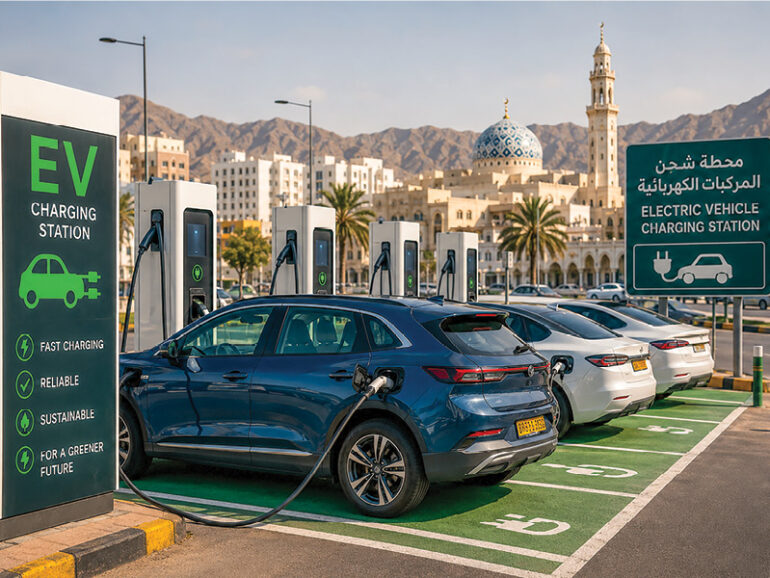
Muscat – Despite the authorities’ efforts to expand the electric vehicle charging network to more than 160 charging points across the sultanate, EV owners are calling for faster improvements to the infrastructure, saying the current system is struggling to keep pace with the rapidly growing number of electric vehicles on the roads.
The call comes as electric vehicle adoption gains momentum in Oman, driven by increasing public awareness and the availability of more affordable electric and hybrid models with longer driving ranges.
Abdulaziz Al Ghuribi, who recently purchased an electric car, described the past two weeks as a particularly difficult experience after moving to a new home and office while waiting for his home charger to be installed.
“I thought it would be a temporary inconvenience, but it revealed a worrying reality about the readiness of our charging infrastructure,” he said. “What I found on the ground does not match the optimistic picture that is sometimes presented.”
Al Ghuribi said many fast chargers are frequently out of service, while lower-capacity chargers often involve long waiting times because they are occupied or unavailable. He also noted that parking spaces designated for electric vehicles at shopping malls are often occupied by conventional vehicles.
He said the growing influx of affordable electric and hybrid vehicles is reshaping the market at a rapid pace and raising important questions about whether the country’s service and regulatory systems are adequately prepared for the transition.
“The future of electric mobility requires more than numbers and announcements. It needs chargers that actually work, organised parking, effective oversight and genuine coordination among all stakeholders to ensure a user-friendly experience,” he said.
Another concerned commuter Amer Al Touqi suggested making it mandatory for all fuel stations to install fast charging facilities for a nominal fee.
“Many of the chargers currently available suffer frequent breakdowns and receive insufficient attention because they are usually provided free of charge,” he said.
Ayman Al Owaisi said Oman could benefit from studying international experiences, particularly in countries such as Britain, where dedicated charging hubs offer multiple charging points at a single location.
“This could be one of the solutions for improving Oman’s charging infrastructure and meeting future demand,” he said.
Saif Al Qasabi, owner of a hybrid, believes the charging network will need more time to mature and said he currently prefers hybrid vehicles until the infrastructure becomes more comprehensive.
According to the Ministry of Transport, Communications and Information Technology, public charging network has expanded to more than 160 charging points, with plans to increase to 350 by 2027. New charging stations are planned along highways, in commercial centres and tourist destinations, and on roads linking the governorates.
The ministry said the number of electric vehicles registered has reached around 5,900, attributing the increase to improvements in charging infrastructure, growing public awareness and the wider availability of electric models in the local market.
Government entities are also preparing to gradually transition their vehicle fleets to electric power, beginning with vehicles used for daily operations within cities.
© 2021 Apex Press and Publishing. All Rights Reserved. Powered by Mesdac