 By MUSCAT DAILY CORRESPONDENT
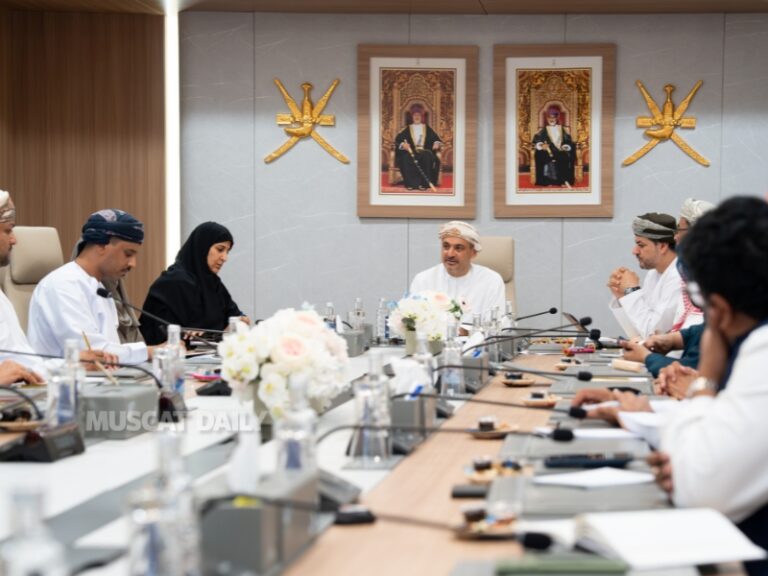
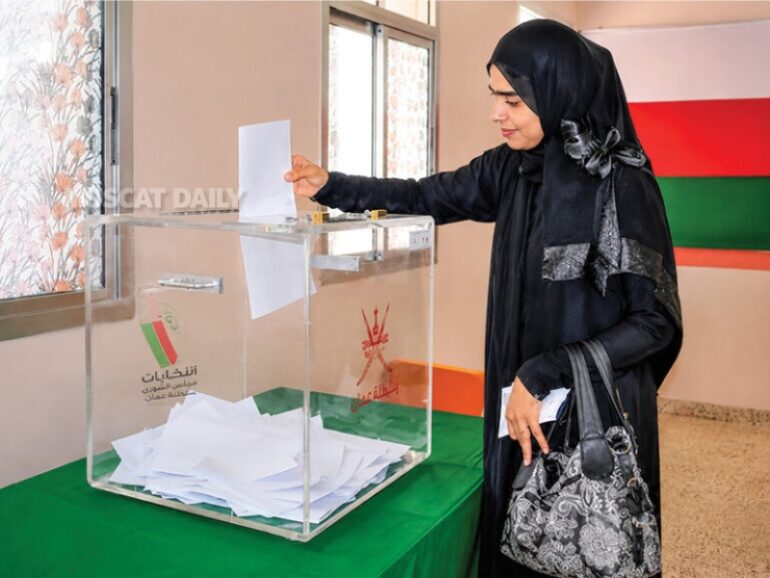
Muscat – From 2027 onwards, each governorate of Oman will have at minimum one female representative in the Majlis A’Shura.
His Majesty Sultan Haitham has allocated eleven additional seats, to ensure both sexes are represented in Oman’sdemocratically elected lower house of parliament.
Shura, or consultation, has been a pillar of Omani politics for over a thousand years. In 1981, Sultan Qaboos incorporated this tradition into the State Consultative Council, so citizens could participate in government efforts to advance Oman’s economic and social development. In 1991, the Council was replaced by the Majlis A’Shura.
The political reforms of the 1990s and 2000s demonstrated Sultan Qaboos’s determination to widen the parameters of decision making.
When he came to power in 1970, education was the cornerstone of his vision of modernisation. The government explicitly encouraged girls’ enrolment in schools. Sultan Qaboos pushed for women’s participation in the labour market, for example by training women to be police officers in 1972, with the first women joining the Royal Oman Police in 1974. By the 1990s, Oman had a highly educated and skilled population of women and men, prepared to participate in governance.
But today, none of the 90 members of the Majlis A’Shura are women.
Sultan Haitham’s recent directive reflects his recognition of the urgent need to facilitate the participation of women in public affairs, to build upon the legacy of his predecessor.
In 1994, just 10% of voters were women. By 2023, this rose to 48%. But female candidacy and representation have not seen comparable improvement. In 1997, 3.8% of candidates were women and two were elected. In 2023, 3.9% of candidates were women. None were elected.
This trend will discourage women from contesting elections or voting for female candidates. Without role models, girls may falsely assume that there is no future for them in politics. The cycle of disenfranchisement repeats.
Studies show that women are more likely to put themselves forward for various opportunities if they know that there will be a designated space for them.
By allocating seats for women, not only will His Majesty Sultan Haitham create the space for female role models. He will also improve legislation in Oman.
The Majlis A’Shura is responsible for reviewing draft laws. Bringing diversity of thought to this process will ensure the laws which pass are stronger.
Meanwhile, a gender imbalance in leadership can foster injustice. Taxes which disproportionately affect women. Discriminatory criminal law. Women denied jobs simply because office designs do not include bathrooms for them. And beyond politics, the exclusion of women has had deadly consequences. Dangerous medicines released because trials only included men. Natural disasters disproportionately killing women omen because of a societal reluctance to teach girls to swim. Women suffering more serious injuries in car crashes because the airbags were tested on male dummies.
The women who served in Majlis Oman have been integral to promoting equality under the law, often citing the Basic Statute of the State or international treaties to underscore their perspectives. They are better positioned to hear about, understand, and communicate certain concerns and hopes for Oman’s future.
So His Majesty Sultan Haitham’s decision to guarantee a minimum of 11 women in the Majlis A’Shura is a bold step towards the vision he and Sultan Qaboos share: of a fair society, not just in the Majlis, but across all economic sectors, all ages, and all governorates.
© 2021 Apex Press and Publishing. All Rights Reserved. Powered by Mesdac