 By GULAM ALI KHAN
Muscat – Oman’s economy expanded by 3% in real terms in the first quarter of 2026, driven by higher oil and gas production and solid growth across key service sectors, according to preliminary data released by the National Centre for Statistics and Information (NCSI) on Sunday.
Real gross domestic product (GDP) rose to RO9.84bn in the January-March period, compared with RO9.55bn in the corresponding quarter of 2025, highlighting the resilience of the sultanate’s economy amid a challenging regional environment.
The latest GDP figures broadly align with the International Monetary Fund’s (IMF) outlook released last week, which forecasts Oman’s economy to grow by 3.7% in 2026, up from an estimated 2.4% in 2025.
The IMF said Oman remains well positioned to achieve stronger growth this year, supported by rising hydrocarbon production, prudent macroeconomic management and continued fiscal discipline. Despite ongoing geopolitical tensions in the region, the fund noted that the overall impact on economic activity has remained limited.
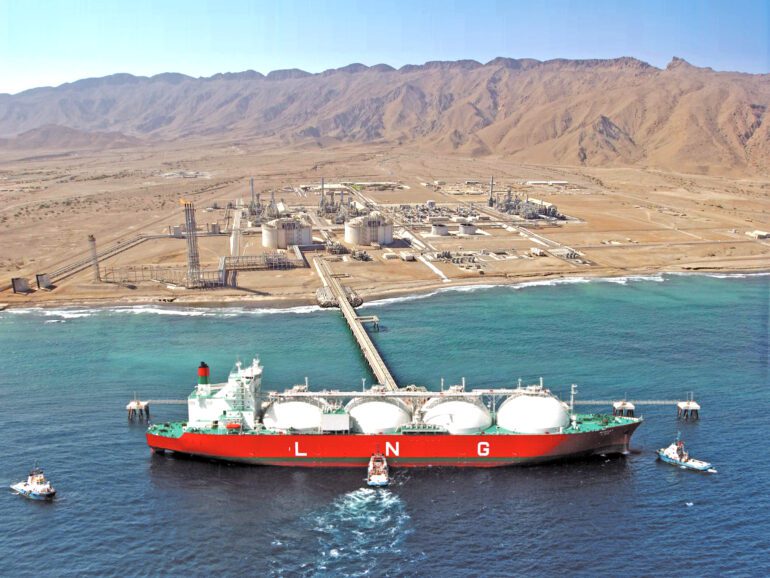
According to the IMF, Oman’s oil and gas infrastructure has remained largely unaffected by regional disruptions, aided by strategic ports located outside the Strait of Hormuz. This has enabled the country to maintain and increase hydrocarbon exports at a time when energy markets have faced supply uncertainties.
Oman’s petroleum activities, which accounted for nearly one-third of the country’s economy, increased 4.6% year-on-year to RO3.04bn in the first quarter. Crude oil activities grew 4.3% to RO2.55bn, while natural gas activities recorded stronger growth of 6% to RO481.2mn.
Non-petroleum activities, representing more than 71% of GDP, expanded 2.4% to RO7.04bn, reflecting continued progress in the sultanate’s economic diversification efforts.
The services sector remained the main engine of non-oil growth, rising 3.7% to RO4.72bn. Financial and insurance activities posted the strongest growth among major service industries, increasing 9.6%, followed by telecommunications and information services, which grew 8.3%, and professional, scientific and technical activities, up 5.7%.
Wholesale and retail trade, the largest component of the services sector, recorded growth of 1.6% to RO801.2mn during the quarter.
Agriculture and fisheries also delivered a strong performance, with output rising 6.1%, supported by a 12.1% increase in agricultural production.
However, industrial activities contracted 1.2% to RO1.98bn, compared with RO2bn a year earlier, as declines in manufacturing and construction outweighed gains in mining and utilities.
Manufacturing activity fell 3.1%, while construction declined 1.9%. In contrast, mining and quarrying expanded 3.6%, and electricity, water and waste management activities grew 8%.
The IMF expects non-oil growth in Oman to ease to 2.5% in 2026, reflecting the impact of regional conflict on tourism and construction, before recovering to 3.2% in 2027 on the back of a broader rebound.
© 2021 Apex Press and Publishing. All Rights Reserved. Powered by Mesdac