
 By MOHAMMED TAHA
Muscat – As concerns over air pollution grow alongside rapid urbanisation and industrial expansion, an Omani researcher has developed a smart environmental monitoring system capable of tracking harmful gases and climate conditions in real time, offering a potential tool to support the sultanate’s sustainability and environmental protection goals.
Developed by Said Nasser Salim Al Habsi, a maintenance engineer and Master of Public Administration student at the University of Buraimi, the project combines Internet of Things (IoT) technology, GPS tracking and cloud computing to create an integrated platform for monitoring air quality and environmental conditions.
Titled Real-Time IoT and Data Logger System for Air Quality Monitoring of Particular Gases and Environmental Parameters, the system is designed to provide continuous monitoring of pollutants while enabling authorities, industries and researchers to access environmental data instantly.
Speaking to Muscat Daily, Al Habsi said the idea was driven by the need for more comprehensive environmental monitoring solutions amid increasing industrial activity and urban growth.
“Many existing systems do not provide a complete real-time solution capable of measuring multiple gases and environmental indicators simultaneously,” he said. “The objective was to develop a smart platform that allows continuous monitoring and remote access to environmental data.”
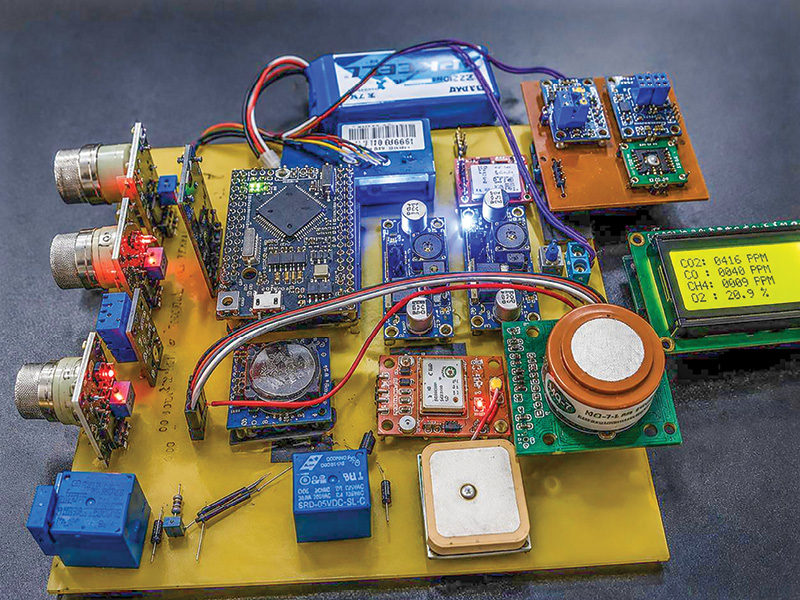
The system monitors several key indicators, including carbon monoxide, methane, carbon dioxide, oxygen levels, humidity and temperature, providing a detailed picture of air quality and environmental conditions.
According to Al Habsi, carbon monoxide and methane are among the most hazardous pollutants associated with fuel combustion and industrial operations, while carbon dioxide levels can indicate ventilation efficiency and broader environmental impacts.
A key feature of the system is its ability to transmit data directly to cloud-based platforms such as Google Sheets, allowing users to view environmental readings in real time. The integration of GPS technology further enables pollution data to be mapped geographically, helping authorities identify areas of concern and monitor environmental changes across different locations.
“The GPS component adds geographical context to the collected data, making it easier to track pollution patterns and support environmental analysis and urban planning,” Al Habsi explained.
To ensure reliability, the system includes a backup data-logging mechanism using an SD card, allowing environmental readings to be stored locally during network outages.
“This feature ensures no data is lost during connectivity disruptions and improves the overall reliability of the monitoring system,” he said.
Al Habsi believes the technology could support Oman’s smart city initiatives and environmental management programmes by helping government agencies, municipalities and industrial operators strengthen pollution control measures and improve occupational safety.
“Access to real-time environmental information can enable faster responses to pollution incidents and environmental emergencies,” he said.
While the project is yet to be implemented on a wider scale, Al Habsi said it has strong potential for future development and could eventually evolve into a nationwide environmental monitoring network covering cities and industrial zones across the sultanate.
Encouraging young Omanis to pursue research and innovation in emerging technologies, he said, “Fields such as IoT, AI and environmental monitoring present significant opportunities to contribute to the sultanate’s sustainable development ambitions. Innovation starts with recognising challenges and developing practical solutions that create a positive impact.”
© 2021 Apex Press and Publishing. All Rights Reserved. Powered by Mesdac