 By OUR CORRESPONDENT
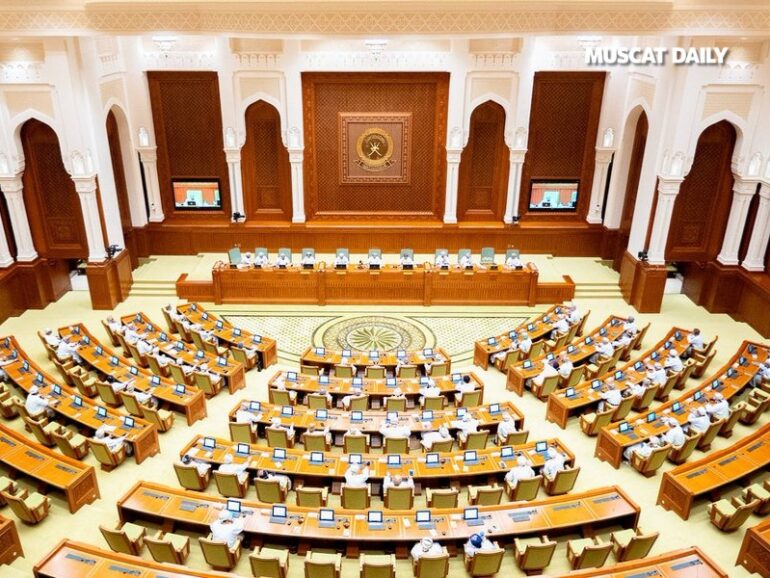
Muscat – The Shura Council will host H.E. Dr Hilal Ali Al Sabti, Minister of Health, on Sunday and Monday, April 26–27, to present the Ministry of Health’s statement before the Council’s honourable members.
The presentation will take place during the sixteenth and seventeenth regular sittings of the third annual session (2025–2026) of the tenth term (2023–2027). The ministerial statement forms part of the agenda approved for the current session and will review the performance of the health sector and assess related policies and executive programmes.
The announcement was made by H.E. Ahmed Mohammed Al Nadabi, Secretary-General of the Shura Council, who said the statement will be structured around six main pillars.
The first pillar focuses on the Ministry’s projects under the Tenth Five-Year Plan (2021–2025), including methodologies for evaluating institutional performance, quantitative and qualitative benchmarking tools, and key performance indicators related to strategic projects and programmes. It will also review operational challenges and lessons learned, and their impact on strengthening the public health system.
The second pillar examines projects and programmes under the Eleventh Five-Year Plan (2026–2030), including mechanisms for determining national health priorities, strategic programmes aimed at improving health indicators, plans to expand disease prevention initiatives, and efforts to enhance integration between preventive and curative healthcare services.
The third pillar addresses the quality of healthcare services by assessing the efficiency of regulatory systems governing public and private health institutions, the effectiveness of medical governance, and the development of mechanisms to address medical errors. It will also highlight initiatives to reduce waiting times, improve diagnostic and treatment services, and ensure the safety and security of medicines.
Al Nadabi added that the fourth pillar focuses on health crisis management, including reviewing legislative and regulatory frameworks related to crises, developing early warning systems and health risk forecasting, enhancing pharmaceutical security, and localising vital industries. It will also examine procurement and supply mechanisms for medicines and medical equipment, as well as coordination with relevant sectors to mitigate health risks.
The fifth pillar outlines future directions for the health system, including expanding decentralisation of specialised services, implementing the unified electronic health record project, increasing the use of artificial intelligence in diagnosis and data management, integrating digital health systems, and strengthening programmes to train and employ national medical personnel. It will also cover the development of systems for analysing and testing pharmaceutical products.
The sixth pillar addresses financing and investment in the health sector through reviewing sustainable financing alternatives, developing the social health insurance model, enhancing investment in the sector, and improving spending efficiency to ensure long-term sustainability.
Al Nadabi noted that discussing the Ministry’s statement reflects the Council’s role in strengthening legislative oversight, evaluating the implementation of national plans, and assessing the impact of health policies on quality of life. These efforts, he said, support the objectives of Oman Vision 2040 and contribute to enhancing the efficiency and sustainability of the health sector in the Sultanate.
© 2021 Apex Press and Publishing. All Rights Reserved. Powered by Mesdac