
 By MOHAMMED TAHA
Salalah – Astronomers at the Dhofar Astronomical Observatory have successfully observed and photographed comet C/2025 R3 from the Najd desert in Dhofar, marking a rare celestial sighting in Oman’s clear pre-dawn skies.
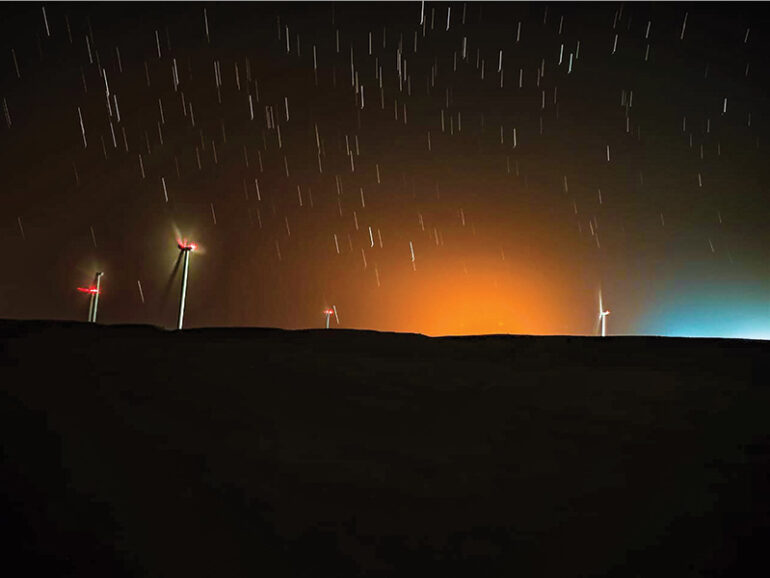
The observation was made at dawn on Friday from the site of the Harweel wind power farm, where the comet was captured against a backdrop of wind turbines.
Speaking to Muscat Daily, Eng Awad Saeed Al Saadouni, head of the Dhofar Astronomical Observatory, said documenting such events is a priority for both amateur and professional astronomers.
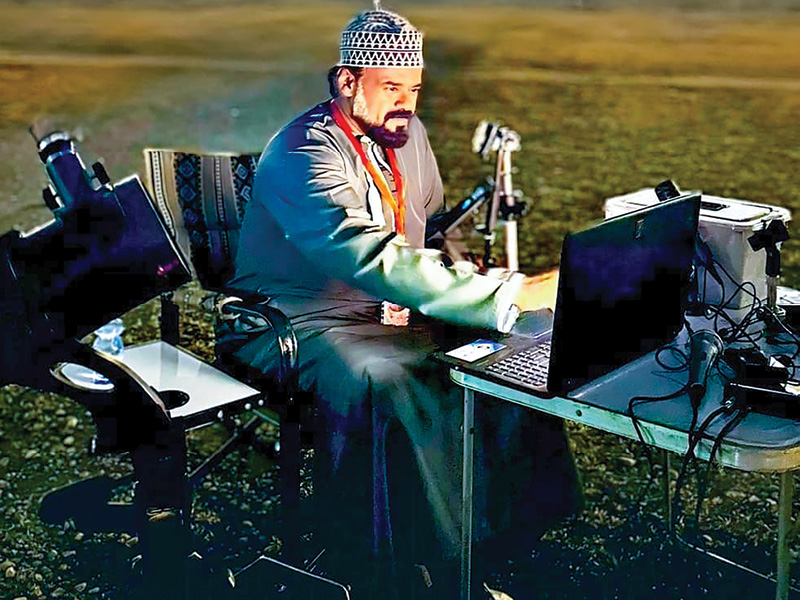
“Comets are among the most fascinating astronomical phenomena, and astronomers always seek to document them whenever the opportunity arises. After several attempts on different days, we were finally able to observe the comet on Friday,” he said.
Al Saadouni added that the observatory photographed the stars alongside the wind turbines, noting that the observatory aims to participate in and document all notable astronomical events throughout the year.
He also highlighted Oman’s favourable conditions for astronomical observation. “The sultanate is distinguished by its clear skies and minimal light pollution, which provide ideal conditions for observing stars and planets,” he said.
According to Al Saadouni, comet C/2025 R3 is expected to make its closest approach to both Earth and the Sun in late April 2026.
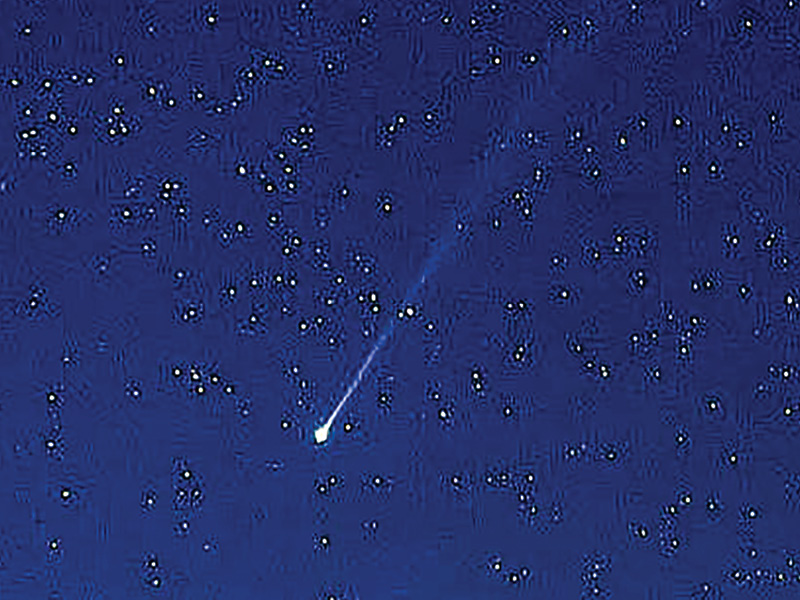
The comet is classified as a long-period comet, taking around 170,000 years to complete a single orbit around the Sun. At its closest point, it will pass between 0.48 and 0.5 astronomical units from Earth — approximately 72mn km.
The comet can currently be observed in the pre-dawn sky towards the eastern horizon, appearing in the constellation Pegasus. Astronomers expect its brightness to increase significantly after it passes perihelion — the point in its orbit closest to the Sun — due to a phenomenon known as forward scattering of sunlight.

© 2021 Apex Press and Publishing. All Rights Reserved. Powered by Mesdac