By Saleh Miri
As the Middle East grapples with the ongoing conflict that erupted in late February 2026, Oman has stood out for its relative resilience and commitment to active neutrality. While Iranian missile and drone strikes have affected infrastructure across Gulf Cooperation Council states – including ports and energy facilities – Oman has experienced notably fewer attacks and less disruption than many of its neighbours.
This context of measured stability has drawn renewed attention to Oman’s long-standing policy of dialogue and mediation, even as it has not been entirely spared. Limited drone strikes have been reported at ports including Salalah and Duqm. Its ports outside the most vulnerable stretches of the Strait of Hormuz have, in some cases, served as alternative logistics routes when primary corridors faced heavier pressure.
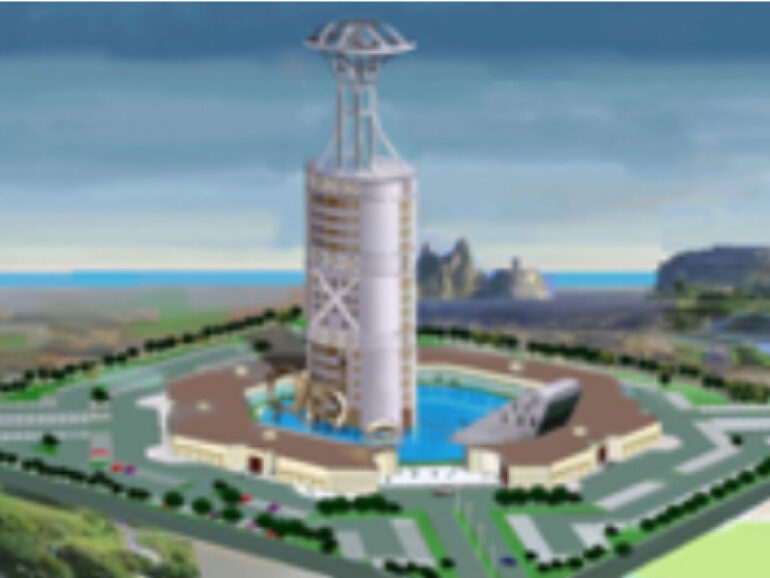
Against this backdrop, plans for a major national landmark are gaining interest as a symbol of the country’s cultural identity and forward-looking vision. The proposed Oman National Monument draws inspiration directly from Omani heritage. Standing approximately 100m tall, the structure takes the form of a monumental khanjar – the traditional Omani dagger that has been part of local identity since at least 1652 and reflects the nation’s historical connections along the Silk Road.
The project envisions a mixed-use development on a site of around 25,000sqm. Key elements include a surrounding lake, a traditional souq, restaurants, coffee shops and ample parking for visitors. The building comprises 19 floors, each approximately 450sqm, accommodating premium office space, administrative areas and a boutique hotel with 25 rooms. The upper section features a striking three-dimensional representation of the khanjar’s grip.
Architectural details emphasise authenticity: the façade will use copper sheets with a silver finish, supplied by a leading German specialist. Evening laser shows from the roof are planned to create a dynamic landmark visible by day and night. The overall aim is to present Oman’s history and cultural identity to the world – offering a distinctive image that contrasts with replicated international icons.
The initiative aligns closely with Oman Vision 2040, the sultanate’s long-term framework for economic diversification, private-sector growth, foreign investment and sustainable development. The national plan prioritises sectors such as tourism, manufacturing, logistics and services, supported by incentives including 100% foreign ownership in many areas and competitive operating conditions in free zones.
In the current regional climate, where many multinational corporations are reassessing concentration risks following disruptions in major hubs, Oman’s combination of geographic proximity to the UAE, developed port infrastructure and policy of neutrality positions it as a viable location for diversified operations. The proposed monument could serve not only as a tourist attraction but also as a prestigious address for companies seeking a stable and culturally resonant base in the Gulf.
While the project remains in the planning stage, it reflects broader efforts to strengthen Oman’s identity, boost tourism and create high-quality spaces capable of accommodating growing international interest. In a region where stability has been tested, such initiatives underscore Oman’s focus on long-term cultural and economic resilience rooted in its own traditions.
This stability is not accidental – it stems from decades of balanced foreign policy. Oman Vision 2040 and the 11th Five-Year Plan (2026–2030) actively promote 100% foreign ownership in most sectors, tax incentives and free zones in Duqm, Suhar and Salalah, and growth in manufacturing, logistics, tourism and services, underpinned by private sector-led diversification away from oil.
In this environment, over-reliance on any single location carries clear strategic risks, as recent events have demonstrated. Oman offers a sound diversification option – geographically close to the UAE, yet operationally more insulated owing to its neutral foreign policy stance.
Many investors have expressed interest in this project. For more information: www. saba-inter.com | [email protected] | [email protected]
Saleh Miri is an architect who came to Oman in the early 1980s
© 2021 Apex Press and Publishing. All Rights Reserved. Powered by Mesdac