 By MOHAMMED TAHA
Muscat – Every year on September 8, the world observes International Literacy Day, first proclaimed by Unesco in 1966 to highlight literacy as a human right and a foundation for inclusive societies.
In Oman, progress in this field stands as one of the sultanate’s most notable development achievements. From widespread illiteracy and only a handful of schools in 1970, the sultanate today records one of the highest literacy rates in the Arab region.
According to the National Centre for Statistics and Information, illiteracy rate fell to 2.5% of the total population in 2023, and to just 0.5% among those aged 15 to 44. This progress reflects decades of government-led campaigns, adult education programmes, and sustained investment in schools and teacher training.
The Ministry of Education continues to run literacy centres across towns and villages, while newer initiatives focus on digital literacy, recognising that navigating technology is now as essential as reading and writing. “Literacy in Oman is not just about eliminating illiteracy,” a ministry official said. “It is about equipping citizens with the tools to thrive in a digital economy and contribute to national development goals under Oman Vision 2040.”
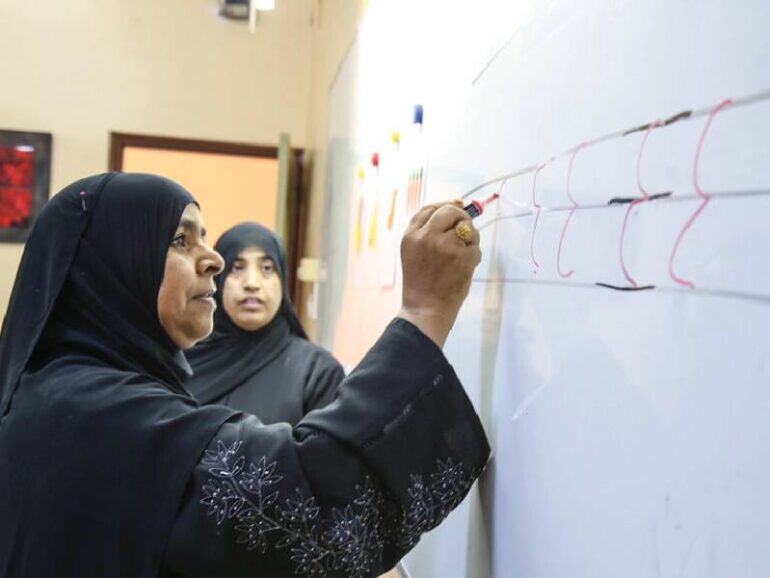
Stories of adult learners like 56-year-old Fatma al Busaidi from Dakhliyah highlight the personal impact of literacy programmes. “I used to feel embarrassed signing documents with a fingerprint,” she recalls. “Today, I can read stories to my grandchildren, manage my household accounts, and even use WhatsApp to stay connected with family.”
Her story mirrors that of many women in Oman who have embraced education later in life. Teachers note that adult learners often display remarkable commitment, driven by a determination to overcome social and economic barriers.
Meanwhile, young volunteers and NGOs are helping to keep literacy relevant in the digital era. Mobile libraries, reading campaigns in parks and shopping centres, and book drives for underprivileged children are gaining popularity.
Experts stress that literacy today extends beyond reading and writing to include digital skills, financial awareness and even climate literacy – all essential for active participation in modern society. “Today’s literate citizen must know how to analyse information online, make informed financial choices and understand environmental issues affecting their community. Literacy is becoming multidimensional,” explained Dr Salim al Hadhrami, an education researcher.
“Literacy is not a privilege for a few but a right for all. It opens doors to employment, strengthens families, preserves culture and empowers citizens to shape their nation’s future,” he added.
This year’s International Literacy Day theme – ‘Promoting literacy in the digital era’ – underscores the need for education systems to adapt to digital transformation, economic shifts and environmental challenges.
© 2021 Apex Press and Publishing. All Rights Reserved. Powered by Mesdac