 By ANIRBAN RAY
Life in the desert can be quite challenging and tough but the Bedouins who reside there for decades cannot be distracted by the many lures of the city. A visit to a traditional home in Wahiba Sands sheds some light
Vast stretches of ochre sand and blue skies play a photographic muse in the middle of Wahiba sands… The ‘sound’ of silence is the only background score among grazing camels… And the gigantic sand dunes, rising imposingly in the distance, make all existence suddenly seem insignificant.
Your pride comes crashing down, your ego evaporates, and tall claims of your achievements begin to lose ground as the majestic layers of sand of varying hues and textures glisten under the sunlight, like a sheet of luminescent pearls, putting nature’s glory on the pedestal it deserves.
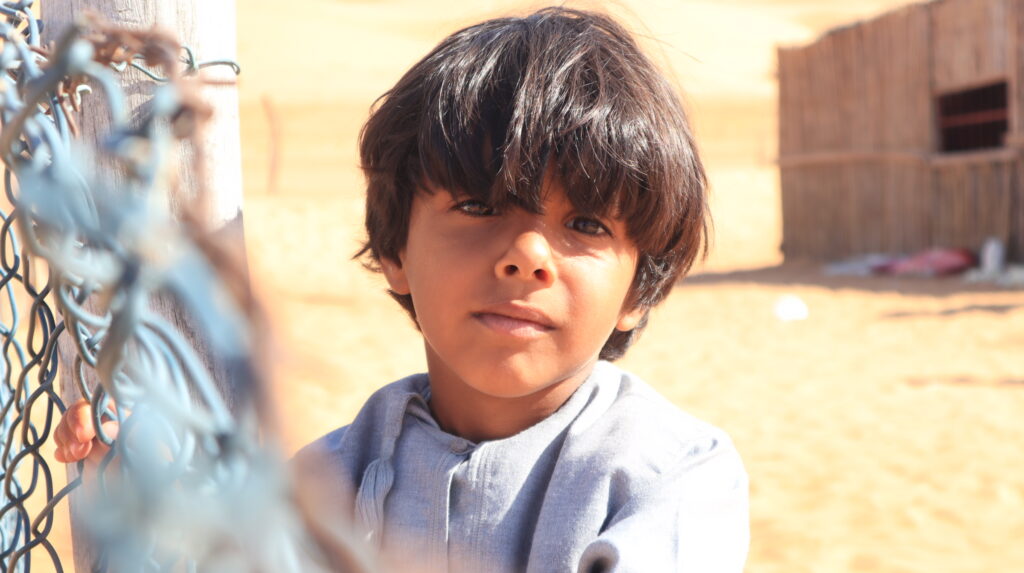
Out of nowhere, under the surprisingly cool shadows of truant clouds, a young lad appears, offering a toothless grin, and you instantly click back into reality from your trance. You are about to be escorted into a new world wherein cultural bonhomie and hospitality will attain new heights.
Dressed in a grey dishdasha, his hair disheveled, and his eyes eager with excitement, the six-year old boy greets you with an innocent smile, and gestures your to follow him on a sort of ‘tour’ of his Bedouin home.
Ali is the youngest member of the many Bedouin families that are spread across the desert. With time and modernity, including mobile networks, penetrating the depth of every dune, the number of Bedouin families have dwelt here over the last few decades. However, there are many who still prefer the desert way of life and believe that ‘the sand is the only truth of life’.
Ali’s family is one of them. His mother Muza (30) greets us with traditional Omani hospitality – kahwa and dates are offered. Her husband, who works in the city, comes home every weekend with gifts, gizmos, and provisions, much to their delight.
Blend of tradition and modernity
This is the new Bedouin lifestyle – a blend of tradition and modernity. There are hundreds of youths who work in the cities while their families continue to stay in the desert. Most of them have two homes – one in Bidiya and one in the desert.

The Bedouin house is spacious, with a big majlis, a huge open kitchen, guest rooms and a private bedroom. Washrooms are located outside the boundaries of the house and a water tanker comes by once a week, doing away with the need for desert dwellers to go in search of water sources.
The majlis is spacious, with efficient air circulation that causes no claustrophobia. Muza said, “Life was tough in the past when both men and women struggled for survival. My mother and in-laws used to cook with wood, now we have cooking gas. Dry chicken, fish and camel milk were the staple diet and we used to bake bread over heated rock. Things are different now, though the sentiments we share in the family are much the same.”
Among the many dangers Bedouins face in the sands these days are the risks from reptiles and insects, like snakes, venomous spiders, and scorpions. Muza said, “When we get stung by insects, we use lemon juice and a home-made ointment. There are no other threats, unlike the past when one would fear from being attacked by hostile tribes who sought ransoms of water and cattle.”
The Bedouins, however, are always wary of encountering sandstorms which come without much warning. Whenever there is a major sandstorm, the indications come forth well in advance and every house takes adequate precautions – they have strong blinds that protect the properties.
“During severe sandstorms, which can cause major destruction to our property, we huddle together with our expensive belongings and hope and pray that it will pass without causing much harm to us,” Muza said, adding that they have developed the right mindset to accept nature’s fury and prepare for it.
As the slow desert breeze whistles down the shinning sand to the thatched palm leaves, Ali shows us the prized decor of the house – a whale vertebrae and a camel skull. They seemed as old as the sand dunes and are considered auspicious icons. Often, the status of a house is determined by these items of decors.
Family business, big bucks
He ran to his favourite corner – the stable of camels. These animals form a very integral part of the family. Mohammad al Jabri, the tour guide from Elite Travel and Tourism said, “There are several types of camels in Oman – for racing, beauty contests, breeding, and for meat.
For Bedouins, camels are part of their family members. Often many families put a mark, like a tattoo, on their necks to identify them as part of a clan or tribe. Many Bedouins breed race camels and sell them for a premium to the sheikhs from Saudi or rich businessmen in Oman for prices as high as RO10,000.
This is a lucrative business and often youngsters evade education and continue the family business as it bring in big bucks. At the same time, there are, indeed, doctors, teachers and other professionals who hail from Bedouin clans.
“Those who have experienced the desert life can never be content elsewhere for long. Some day, they will return to the slow-paced, pollution free and peaceful existence in the desert,” he said, adding that children of Bedouins have to travel long distances in the desert to attend schools that are far-flung from their homes.
Influential matriarch
Salma al Wahibe, the matriarch of the tribe is a well known face in the desert. Fondly known as Mama Salma, she is a highly influential figure who is respected in the tribe and has been instrumental in resolving many family and community disputes.
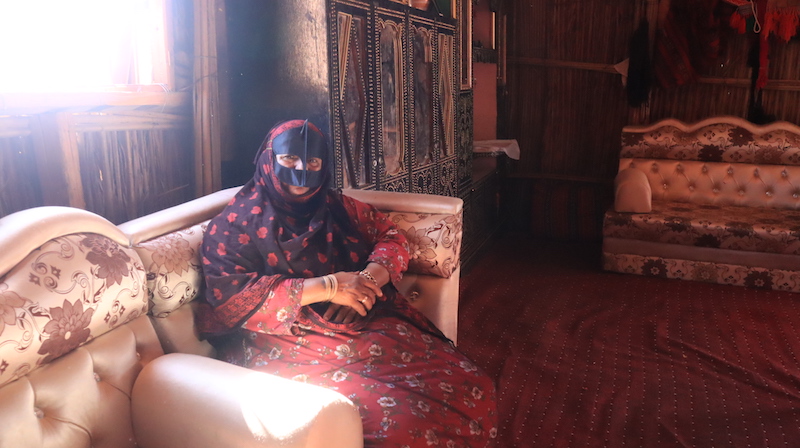
Known for her intelligence, clout, as well as excellent hospitality, Mama Salma drives around in her SUV with an air of superiority. She speaks excellent English, sings old desert songs, and is considered the epitome of women empowerment and feminism.
A few years back, Mama Salma rescued a German tourist – Johannes Bentz – who was lost in the dunes for hours. With her assistance, the tourist got a new lease of life and he later came back to express his gratitude to the influential matriarch.
“I am born here and I have been residing here for decades. The desert has given me love and life. The past was quite tough, yet I love every phase of the desert though we have houses in the city. My husband and I hardly stay there, we prefer the embrace of the sands which feels like our true home.”
Each day in a Bedouin family commences in the wee hours when people begin their day with prayers. The women then get down to daily chores. Often, people spend leisure hours enjoying a game of cards or indulging in gossip, which is also a way of catching up with events and happening within the tribe.
The families of Bedouins also get together to celebrate marriages, Eid, and child-births frequently. It is a time when relatives and friends get together, don traditional Bedouin attire and sing traditional songs.
A mother of six, Mama Salma asserts, “Previously we used to get annoyed with tourists who tend to disturb our camels with loud conversations. However, slowly we learnt to accept them as our guests who are seeking to experience our lifestyle.
Quashing popular belief that Bedouins are a deprive lot, Mama Salma said, “People feel we are missing out on the privileges of the city – like easy transport, cinemas, malls, fast food. However, we have visited cities but have never been enamoured by these lures. The desert has always been our home – it is our first love, our heartbeat, and our life!”
© 2021 Apex Press and Publishing. All Rights Reserved. Powered by Mesdac