 By OUR CORRESPONDENT
Muscat – Oman has improved its standing in the 2025 ITUC Global Rights Index, moving from a rating of 4 to 3 – an improvement described as significant by labour observers.
Released by International Trade Union Confederation (ITUC) during the International Labour Conference in Geneva being held from June 2 to 13, the index assesses workers’ rights across 151 countries.
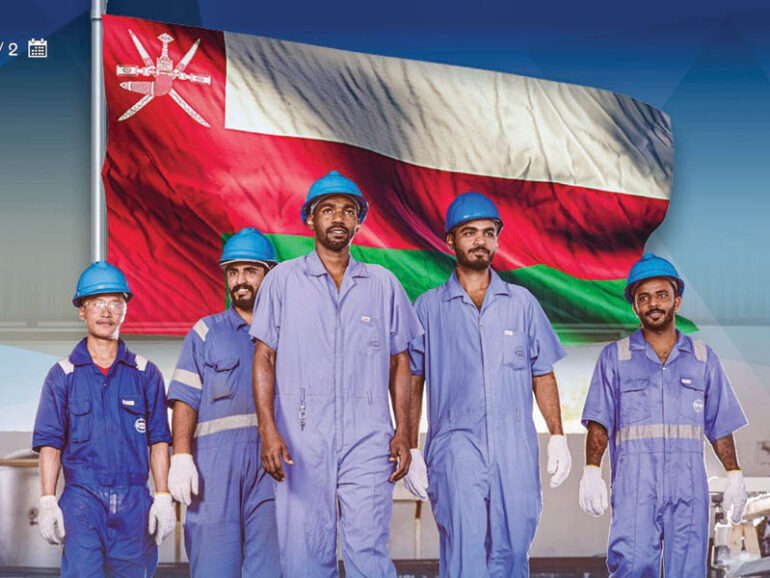
The rise in Oman’s rating resulted from a series of recent labour reforms, particularly establishment of a tripartite dialogue mechanism involving representatives from the government, employers and workers. The mechanism is led by General Federation of Oman Workers (GFOW) and aims to enhance social dialogue and ensure more inclusive policymaking.
‘These reforms have paved the way for constructive engagement on employment issues and more efficient mechanisms for resolving labour disputes,’ the ITUC report stated.
The tripartite committee now plays a key role in drafting, reviewing and amending labour legislation. The reforms have also improved workers’ access to justice and promoted fairer dispute resolution processes.
The Global Rights Index measures countries against 97 indicators based on International Labour Organization (ILO) standards, covering the right to strike, freedom of association, collective bargaining, protection from violence and freedom of expression for trade unionists. Ratings range from 1 (best) to 5 (worst).
Oman’s progress contrasts with broader regional trends. The Middle East and North Africa remains the lowest-ranked region globally, with an average score of 4.68 in 2025, slightly better than its lowest-ever score of 4.74 in 2024. The report stated, ‘This indicates that most workers are subject to systematic violations or have no guarantee of basic labour rights.’
It noted that workers in Qatar, Saudi Arabia and the United Arab Emirates continue to face bans or restrictions on freedom of association and the right to organise. These limitations particularly affect migrant workers, who make up a large portion of the workforce in those countries.
‘Oman offered a glimmer of progress, improving its rating from 4 to 3 in 2025, due to a series of progressive labour reforms aimed at strengthening social dialogue and dispute resolution,’ the report added.
Oman is one of only three countries that improved their ratings this year, alongside Australia and Moldova. In contrast, seven countries – Argentina, Costa Rica, Georgia, Italy, Mauritania, Niger and Panama – saw their ratings worsen.
The ten worst countries for workers in 2025 were listed as Bangladesh, Belarus, Ecuador, Egypt, Eswatini, Myanmar, Nigeria, the Philippines, Tunisia and Türkiye.
ITUC said this year’s report revealed a worsening crisis for workers and unions globally, with average ratings deteriorating in three out of five world regions. Europe and the Americas recorded their worst scores since the index was launched in 2014. Only seven countries received the top-tier rating in 2025.
© 2021 Apex Press and Publishing. All Rights Reserved. Powered by Mesdac