 By HUBERT VAZ
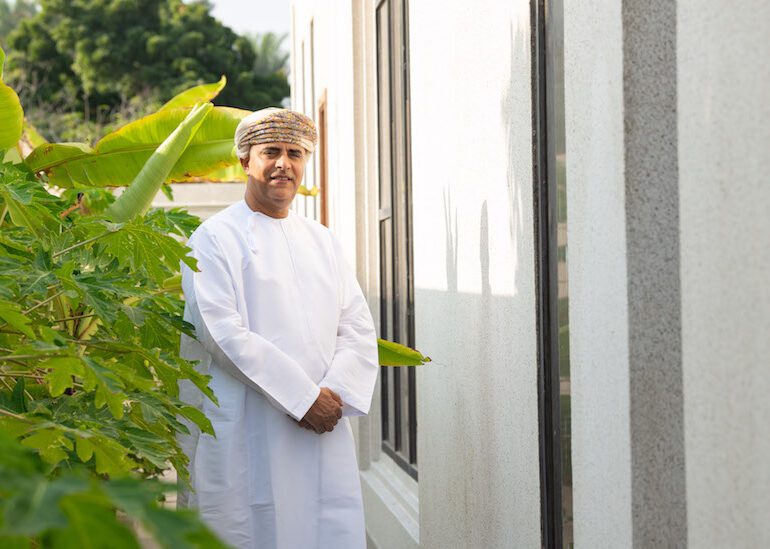
On the occasion of Oman’s 53rd National Day, Hon Dr Amor al Matani, president, Environment Society of Oman (ESO), reiterates the commitment to continue to protect Oman’s natural heritage for future generations. ‘Biodiversity loss and climate change are two of the most pressing environmental issues of our time,’ he points out in an exclusive interview
After taking over in March 2023, how satisfied are you with the current structure, goals, progressive strides and time management of undertaken projects of ESO?
At the annual general meeting held in March 2023, the ESO Board launched the new ESO Strategy for 2023 to 2027, which sets our mission, vision, core values, and priority areas. The goals have been set with clear and aligned key performance indicators that will support these goals while the ESO team strives to achieve the performance measures. Our targets are clear while we remain committed to playing a leading role in conserving Oman’s natural environment, which is its heritage, through research, education, advocacy, and conservation.
What short-term and long-term plans have you drawn up for the next five years?
Our five-year strategy is accessible via our website. We aim to continue to protect Oman’s natural heritage for future generations. We aim to achieve this by focusing on research on threatened and endangered species to inform conservation management efforts and building the capacity of Omanis within the environmental sector. Furthermore, we focus on educating and raising awareness in communities on the importance of adopting more sustainable lifestyles and advocating for environmental sustainability. Our programmes and activities align with the UN Sustainable Development Goals, Oman Vision 2040 and our nation’s ambitions to reach net-zero greenhouse gas emissions by 2050.
As a non-governmental organisation, with a mandate to work in line with government policies/strategies for conservation of the environment, what type of support do you think ESO needs to fulfill its annual goals?
As the only non-profit and non-governmental organisation in Oman, one of the biggest challenges we face every year is to raise funds to support our research, programmes and activities and create a sustainable income source to maintain our human resource capacity. We continue to raise awareness and develop fundraising strategies to encourage individuals, companies and other local and international entities to support us in making a real and measurable difference when it comes to our environment. Any entity interested in supporting our work, can find more information on our website: eso.org.om/donate/ and eso.org.om/individual-membership.
Are they any specific hurdles that ESO faces every year? How do you think it can tide over these hurdles?
We have a great responsibility to engage the public and other stakeholders in our mission, which means in making a positive difference to the environment and in fighting climate change and we need to raise funds to achieve our goals. As explained earlier, one of the main challenges we face is getting financial support. We continue to work towards encouraging the private sector and other potential stakeholders to support our efforts through corporate membership, fundraising initiatives, sponsorships of our core projects, and donations.
Increasing our human capacity is directly linked to increasing financial support because with sufficient resources we will be able to recruit and retain employees to meet our human resource requirements. Our limited capacity causes some limitations when considering expanding our scope beyond what we are currently handling. There are a multiple pressing environmental issues that we are interested in taking on but, unfortunately, we do not currently have the capacity to lead on.
We aim to encourage the general public to become more environmentally conscious, cultivate environmental awareness, and get more people to support our efforts. However, it has also been somewhat of a challenge to create engaging content about our scientific work that also makes it clear that there is a direct connection between the topics we address and the impacts of human behaviour on human livelihoods, climate change, and the importance of sustainability in everyone’s everyday lives. We are developing various animations, videos, and infographic content to make this information more accessible while we are working with a reputed PR firm in Oman to circulate important information and updates in the public domain.
Last but not least, science aims to inform environmental policy decisions, but translating research finding into policy can be challenging. Still, we are making headway and have worked hand in hand with the Environment Authority in Oman to host three conservation workshops last year targeted at addressing threats faced by sea turtles, humpback whales and raptors. We continue to engage with different members of society, ranging from high level government decision-makers to school children. Furthermore, we have been conducting research on various threatened and endangered species over the last twenty years, and we are now at the stage where we understand the population status and need to get policy-makers and industry stakeholders to support direct actions towards conservation.

Do you think it would be beneficial to entrust the key tasks before ESO every year to smaller independent entities that work autonomously yet are all accountable and part of the same parent organisation (ESO).
If I understood your question correctly, this may not be directly applicable to ESO as no such entities exist here in Oman that could support ESO in this way. However, all of the work and achievements of ESO have to do with the strength of our local and international partnerships. Several of our research programmes are implemented with the supports of specialised subject matter experts and coordinated with international bodies.
Recently, for example, we entered into a partnership with BirdLife International, the world’s largest nature conservation partnership as it is a strategic global partnership of conservation organisations in over 100 countries around the world. They are working to conserve birds and to promote sustainability in the use of natural resources. Under the agreement, ESO and BirdLife International will work towards supporting each other’s endangered bird conservation initiatives, and in particular for work on international flyways initiatives. The areas of cooperation include awareness-raising, capacity-building, event-organising and research opportunities.
Is there need to enhance efforts by ESO towards roping in/engaging a larger number of young volunteers (Omani/expatriate) to educate communities and work towards sustainability?
Realising the need to enhance the capacities of Omanis in the areas of environmental research and sustainability, ESO launched the Capacity Building Programme to recruit young Omanis, provide them with in-house training and field experience to develop their environmental skills.
Some individuals who were part of the Capacity Building Programme continued to stay with ESO and others have proceeded to pursue successful environmental careers in the private sector while they continue to remain volunteers and ambassadors of ESO.
ESO recognises the value in volunteer support and continues to receive volunteers on an annual basis who support our various programmes and initiatives, whether through data collection, supporting photography and videography for our events or joining our beach clean-up events. Of course, there is always scope to develop this programme further.
What environment conservation issues are typically important in Oman and require a large portion of ESO’s attention as well as resources annually?
Biodiversity loss and climate change are two of the most pressing environmental issues of our time.
With regards to the loss of biodiversity, ESO continues to conduct and support research on threatened and endangered species to understand their status and the threats these species face. This information is then transferred to key decision makers to support the development and implementation of conservation measures.
In addition to these efforts to preserve biodiversity, we also work at the community level with schools, farmers, women’s associations and fishermen to raise environmental awareness and engage them in being part of the solution. This work requires more financial resources to ensure long-term continuity and success of these essential programmes that positively impact our environment and, therefore, society.
Climate change is a pressing issue and we need the community at large to be informed about climate change in order to support the government’s ambitions towards net-zero greenhouse gas emissions by 2050. Based on the understanding of the need to build a more environmentally conscious community, ESO launched the Oman Climate Dialogues in partnership with ASYAD and has hosted a series of panel discussions and workshops in the lead up to the UN Climate Change Conference, which will be taking place in the United Arab Emirates at the end of this year.
We are covering various topics that range from green finance, nature-based solutions to the perspective of youth and popularity of green jobs as we work towards this transition.
With regard to generation of resources, do you think there is need for more innovative approaches to engage the corporate sector as well as individuals?
Today, there is an urgent need for corporates and other entities to support environmental initiatives that align with achieving the net-zero emission targets and environmental, social, and corporate governance (ESG) targets. While ESO’s goals and activities align with most of these priorities, there is a gap in communicating these targets in a way that meets the needs and expectations of corporates.
Additionally, a lot of corporates are KPI-driven. Therefore, there is a need to find a middle-ground where our core projects are communicated and delivered in a manner that aligns with the KPI expectations of corporates.
What type of marine and terrestrial research has ESO undertaken during the past two decades – is it an ongoing process? Has there been any collaborative efforts with neighbouring GCC states?
All of our research programmes can be accessed by the public via our website www.eso.org.om. ESO currently has four flagship programmes: the Whale and Dolphin Research and Conservation Programme, the Sea Turtle Research and Conservation Programme, the Raptor Research and Conservation Programme, and The Frankincense Tree Research and Conservation Programme.
Whale and Dolphin Research and Conservation
Dedicated research on Arabian Sea humpback whales has confirmed that this unique sub-population is a relatively small (possibly fewer than 100 individuals off the coast of Oman) resident in the Arabian Sea year-round and isolated from other humpback whale populations. In 2008, the population was designated ‘Endangered’ on the IUCN (International Union for Conservation of Nature) Red List of Threatened Species. The conservation of this unique population across its regional range is critical to its survival. ESO continues to collaborate with regional NGOs and research institutes across its range in the Arabian Sea. After 20 years of research using cutting-edge technology, we understand a lot about the population, their movement and the complexities of the threats that they face. We are now working towards advocating for a national conservation management plan, which we hope will eventually develop into a regional conservation plan. We also recently launched a Marine Mammal Atlas, a great reference document that can be utilised by researchers, students or the general public and can be accessed for free on our website.
The Sea Turtle Research and Conservation Programme
Species of sea turtles found in Oman are threatened to various degrees on the IUCN Red List of Threatened Species and face a high risk of extinction in the wild. Threats include extensive coastal development, light pollution, beach driving, bycatch, ghost fishing, plastic pollution, and climate change and are putting significant pressure on the survival of sea turtles. In recent years, a declining trend in nesting numbers of loggerhead sea turtles has been observed on Masirah Island, representing a statistically significant 79% decline, which is believed to have occurred within a single loggerhead generation. ESO, in collaboration with the Environment Authority (EA), has been working to counteract this loss through conserving the species, maintaining a healthy marine environment, and preserving the socio-economic balance of communities. Some of the recent direct conservation actions ESO has implemented include a community programme to mitigate the impacts of lighting pollution and an annual beach cleaning initiative on Masirah Island since 2017. As a result, ESO has managed to remove almost 800 tons of marine debris off of prime sea turtle nesting beaches. There have also been past collaboration efforts with the United Arab Emirates in satellite tracking to identify essential habitats for sea turtles in the region.
The Raptor Research and Conservation Programme
Research initiated in 2012 shows Oman to be a stronghold for Egyptian and Lappet-faced vultures, with Masirah Island hosting the second-highest density of breeding Egyptian vultures in the world. We continue to conduct research to understand the breeding, movement, and survivorship of these vultures and have included satellite tracking and setting camera traps for Lappet-faced vultures. In our efforts to facilitate the development of a Vulture Conservation Management Plan, we hosted a workshop in coordination with the Environment Authority last year. Our conservation efforts to support these species include outreach initiatives targeting local communities to raise awareness about the important role raptors play in our environment and the behaviour and good practices we can all adopt to support their conservation.
The Frankincense Tree Research and Conservation Programme
The frankincense research programme was initiated in 2010 to understand sustainable levels of harvesting the precious frankincense tree (Boswellia sacra), the distribution and abundance of the tree, and the threats that these trees face. Over the years, ESO’s work has included research into the sustainable harvesting of frankincense trees and related seeding and flowering. More recently, ESO undertook a rapid population and distribution assessment. The tree population is relatively stable, however, intensifying external pressures are a real cause for concern and include insect infestations, camel grazing and increased harvesting. Bilingual infographics designed to raise awareness and explain methods of sustainable harvesting, best practices for planting, and an overall introduction to frankincense trees are freely available to consult on our website.
What, according to you, is the need of the hour for ESO – protection of endangered species in Oman, ensuring cleaner oceans along the sultanate, anti-litter campaigns, education/empowerment of fishermen, creating greater awareness on sustainability and educating the younger generation, or any other issue?
All these topics that you just mentioned are essential and need to be collectively addressed. We need to all stand together as a nation to address these challenges, which are interrelated, just like their solutions. Our biodiversity, the variety of animals, plants, fungi, and even microorganisms like bacteria that together form our natural world, plays a huge role in our ecosystem to maintain balance and support life, including the lives of us humans.
In order to protect our biodiversity, it must be monitored and studied to understand the livelihood and threats to survival. This leads us to other mitigation initiatives, such as anti-littering campaigns while it also requires a nationwide educational and empowerment effort from the youth, from the community.
When it comes to encouraging our younger generations to become more environmentally conscious, and in cooperation with the Ministry of Education and with the support from sponsors, we organise the NAMAT competition for schools on an annual basis.
NAMAT invites young people and educators across Oman to contribute their ideas and take action towards creating sustainable and innovative environmental solutions. The main aim of the NAMAT Competition is to inspire young students and their teachers across Oman to bring their innovation, creativity, and problem-solving skills in generating unique solutions to tackle the climate crisis.
© 2021 Apex Press and Publishing. All Rights Reserved. Powered by Mesdac