
 By GULAM ALI KHAN
Muscat – Food prices in Oman continued to rise sharply in September, increasing by 8.4% year-on-year, even as headline inflation eased to 3.2% from 3.4% in August. Higher vegetable, fruit and meat prices remained the main sources of pressure on household food costs, while transport and several services-related categories also recorded increases, according to data released by the National Centre for Statistics and Information (NCSI) on Tuesday.
The figures highlight the divergence between overall inflation and food price increases, with the cost of food items rising considerably faster than the broader consumer price index.
During the first nine months of 2026, consumer prices increased by an average of 3.0% compared with the corresponding period of 2025, NCSI data showed. Food prices remained a significant source of inflationary pressure, with several fresh food items recording double-digit annual increases.
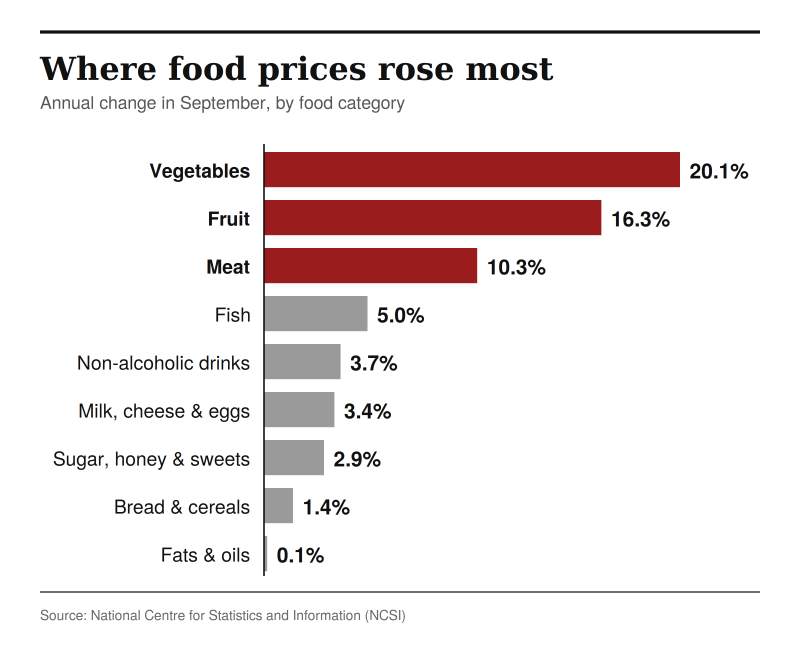
Vegetables recorded the steepest year-on-year increase among food items in September, with prices rising by 20.1%, followed by fruits at 16.3% and meat at 10.3%. Fish prices increased by 5%, while non-alcoholic beverages rose by 3.7%.
Other food items registered more moderate year-on-year increases in September. Prices of milk, cheese and eggs rose by 3.4%, while sugar, jam, honey, confectionery and chocolate increased by 2.9%. Bread and cereals recorded a 1.4% rise, while fats and oils edged up by just 0.1%.
Food prices also increased further in September compared with August. Vegetable prices rose by 5.1% month-on-month, while fruit prices increased by 2%. Meat prices rose by 0.8%, as did prices of sugar, jam, honey, confectionery and chocolate. Prices of bread and cereals increased by 0.2% month-on-month.
Outside the food category, transport prices rose by 4.8% year-on-year in September, adding to the broader cost pressures facing consumers. Prices of miscellaneous goods and services increased by 4.7%, while restaurants and hotels recorded a 3.6% rise.
In contrast, the housing, water, electricity, gas and other fuels category registered a marginal increase of just 0.1% year-on-year, indicating considerable variation in price movements across the consumer basket.
At the governorate level, Dhahirah recorded the highest inflation rate at 4.4% in September, followed by Al Wusta at 3.9%. Dakhiliya registered inflation of 3.6%, while Muscat recorded 3.3%.
The higher inflation rates in recent months coincide with heightened geopolitical tensions in the Middle East, particularly following the outbreak of the US-Israel conflict with Iran on February 28. The conflict has affected global energy prices, shipping costs and supply chains, potentially adding to import costs for Gulf countries, including Oman, particularly for food and other consumer goods.
© 2021 Apex Press and Publishing. All Rights Reserved. Powered by Mesdac