 By OUR CORRESPONDENT
Muscat – Early detection is transforming the breast cancer landscape in Oman, with the proportion of women presenting with advanced-stage disease falling significantly over the past decade, according to Dr Taha Al Lawati, Senior Consultant Surgical Oncology and Breast Oncoplastic Surgeon at Muscat Private Hospital.
Speaking to Muscat Daily as Oman marks Breast Cancer Awareness Month, Dr Al Lawati said the improvement reflects growing public awareness, better access to specialised services and sustained efforts to encourage early detection.
The Ministry of Health has launched a national breast cancer awareness campaign called ‘Itminni’ (Be Reassured) this October. The year-long initiative is being conducted across the sultanate’s governorates to encourage screening and address fears surrounding a cancer diagnosis.
Breast cancer remains the most common cancer among women in Oman, accounting for approximately 25–30% of newly diagnosed cancers among women annually. According to Ministry of Health statistics cited by Dr Al Lawati, the country recorded slightly more than 400 new cases in 2021.
One of the most notable changes has been the stage at which women are diagnosed.
A study conducted more than a decade ago found that around 75% of breast cancer patients in Oman presented with advanced disease. A subsequent study reported that the proportion had fallen to approximately 25%.
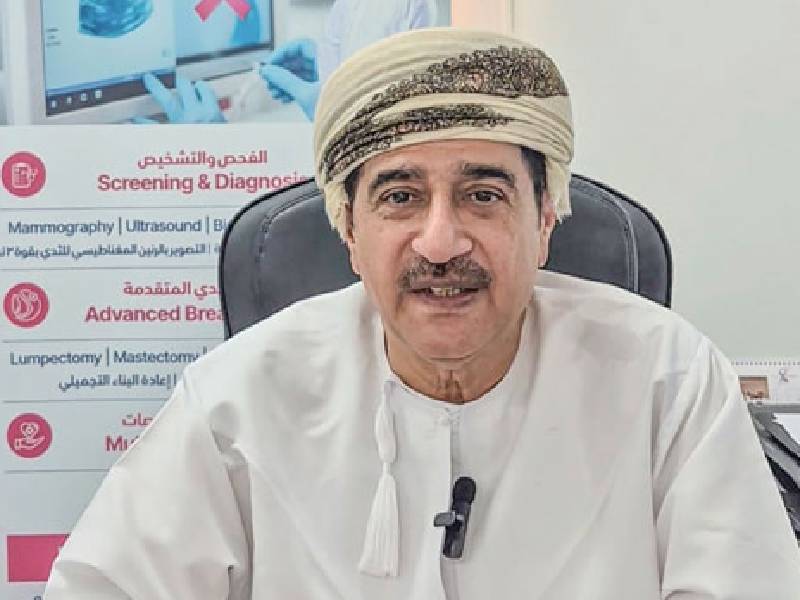
Dr Al Lawati attributed the improvement to greater awareness, expanded specialised breast services and the work of the Oman Cancer Association, particularly its mobile units offering early breast cancer screening.
However, delays in seeking medical attention remain a concern. Fear, limited awareness and misconceptions about cancer can prevent women from consulting specialists. Some patients also attribute illness to supernatural causes, highlighting the need for continued public education.
“Ignorance is the enemy of human beings,” Dr Al Lawati said, emphasising the importance of accessible and accurate information.
Recognising the warning signs
Dr Al Lawati advises women to become familiar with the normal appearance and feel of their breasts so they can recognise changes that require medical assessment. Breast awareness is not a substitute for screening or a means of diagnosing cancer.
Women aged 40 and older should discuss regular mammography screening with their healthcare providers. Those with a family history of breast or ovarian cancer, or known genetic risk factors, may require an earlier or individualised screening plan.
Warning signs include a new lump, persistent thickening, changes in breast size or shape, skin dimpling, nipple inversion and unusual discharge, particularly if blood-stained. Persistent swelling or skin changes resembling orange peel should also be assessed promptly.
Treatment options in Oman have expanded considerably over the past 25 years, improving opportunities for breast preservation and reconstruction.
Breast-conserving surgery, immediate and delayed reconstruction, sentinel lymph-node procedures and techniques to assess lymph-node involvement are among the available approaches.
Patients may also receive chemotherapy, radiotherapy, immunotherapy and targeted therapies, depending on their diagnosis. Multidisciplinary teams help determine treatment plans based on the tumour’s characteristics and the individual patient’s needs.
Dr Al Lawati stressed that breast cancer is not a single disease. Different tumour types have different biological characteristics and require tailored treatment.
Psychological and social support, appropriate nutrition and healthy lifestyle choices are also important during treatment and recovery. Addressing stigma and misconceptions, including the mistaken belief that cancer is contagious, remains essential.
Dr Al Lawati urged women not to allow fear or embarrassment to delay screening or medical assessment.
© 2021 Apex Press and Publishing. All Rights Reserved. Powered by Mesdac