 By OUR CORRESPONDENT
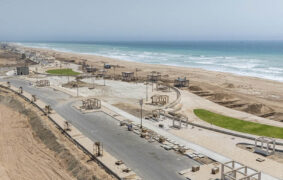
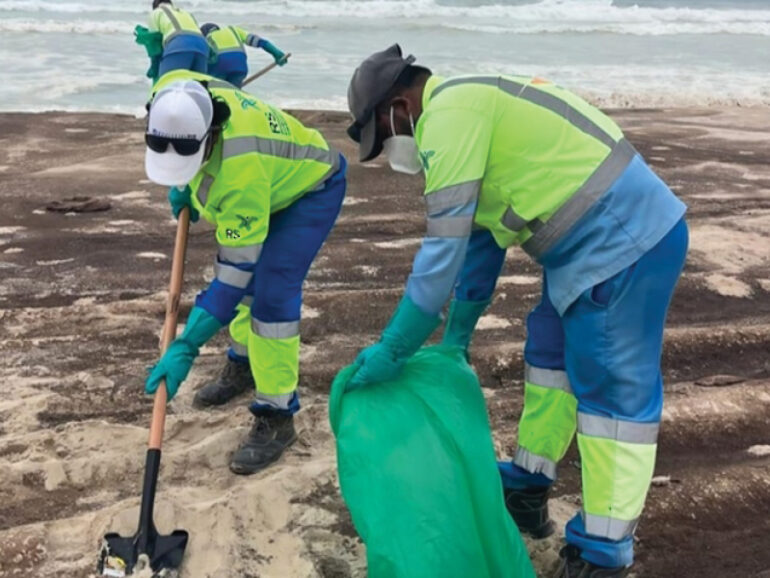
Muscat – Oman intensified cleanup and monitoring operations after oil from a grounded tanker off the Al Hallaniyat Islands reached Duqm’s Ras Madrakah coast, where a stretch of 12km has been affected. Authorities stated that no pollution had so far been detected along the shores of Masirah Island.
Specialist teams have been deployed to affected and high-risk areas to contain the spill, clean contaminated shorelines and assess its environmental impact, the National Committee for Emergency Management (NCEM) said on Friday.
The Hazardous Materials Handling Sector, led by the Civil Defence and Ambulance Authority (CDAA) and the Environment Authority (EA), is tracking the movement of the slick and updating projections of its likely trajectory using monitoring data and modelling.
Maj Gen Sulaiman Ali Al Husseini, Chairman of the CDAA, and Dr Abdullah Ali Al Amri, Chairman of the EA, visited affected stretches of Ras Madrakah on Friday to assess cleanup operations and response measures.
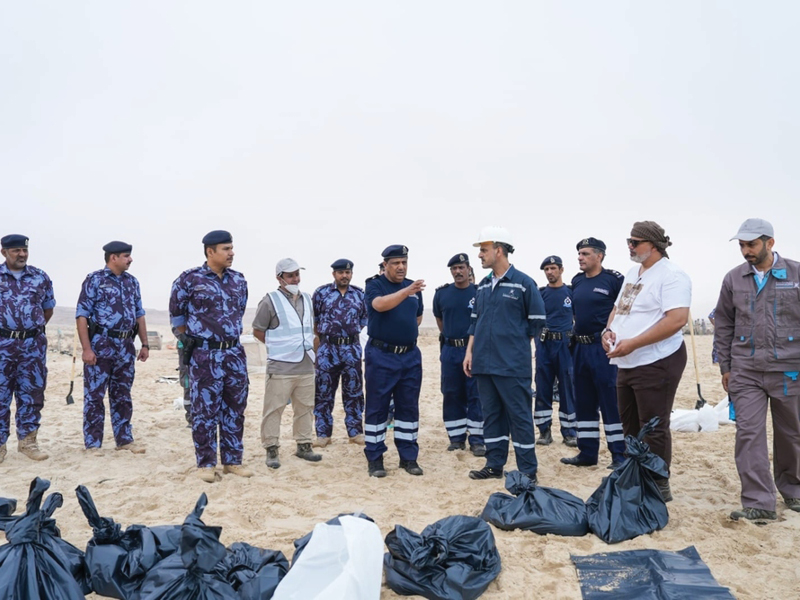
Authorities have also stepped up surveillance around Masirah as a precaution. Specialist teams are monitoring the shoreline, while response equipment has been positioned to deal with any change in the spill’s direction.
The NCEM said monitoring results showed that pollution had not reached Masirah’s shores.
Preparations are also being made to protect water supplies. Daily tests at Ras Madrakah and Duqm have so far found samples safe and within approved standards.
On Masirah, coastal wells are being prepared as an alternative source should oil affect seawater intakes at the island’s desalination plant.
Waste generated by shoreline cleanup is being directed to designated areas at Duqm’s engineered landfill. A separate site has been prepared at Masirah’s waste transfer station should contaminated material need to be collected there.
be’ah is coordinating with the EA to mobilise personnel and equipment through its contractors for shoreline cleanup operations.
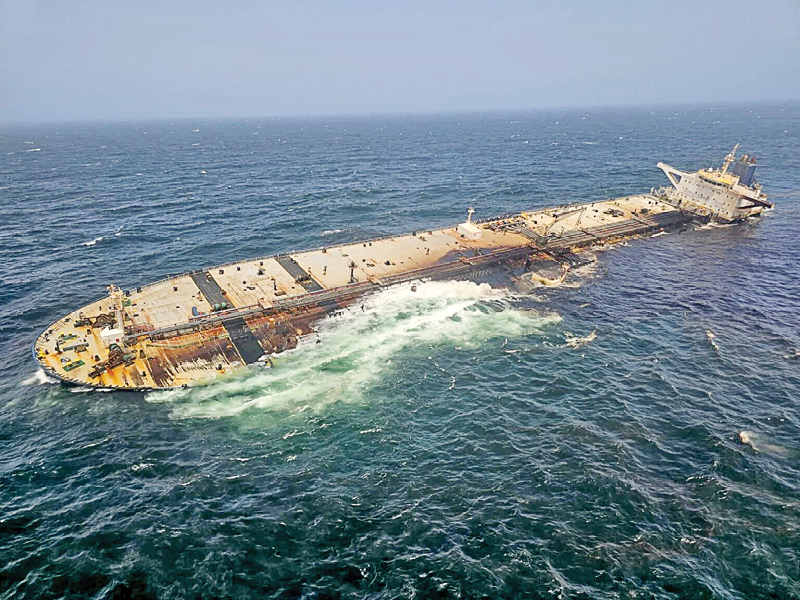
The response follows cargo leaks from the grounded fuel tanker Caroline Bezengi off Al Qibliya Island in the Al Hallaniyat archipelago.
Inspection of fish landing sites
The Food Safety and Quality Centre has also stepped up monitoring of fishing areas along the Arabian Sea, with teams assessing any potential impact on fisheries and the safety of seafood.
The centre said inspections are covering fish landing sites, processing plants and markets, while officials are tracking the origin and movement of catch. Samples are also being collected for laboratory testing, and specialist teams have been deployed to monitor coastlines and landing sites in governorates bordering the Arabian Sea.
The NCEM partially activated its hazardous materials, essential services and public information sectors on Thursday as the scale of the incident became clearer.
Emergency sub-committees were also activated in Al Wusta and South Sharqiyah to deal with any further spread of pollution.
Authorities said the response combines cleanup, environmental assessment, shoreline surveillance and contingency planning aimed at limiting damage to marine and coastal ecosystems.
Salvage operation of Caroline Bezengi continues
A salvage operation is under way to stabilise the grounded tanker Caroline Bezengi, Ambrey – the UK-based risk management company – said on Thursday.
Ambrey said specialist personnel had boarded the vessel with support from the Royal Air Force of Oman to assess conditions and begin stabilising the tanker and its cargo. The response involves salvage vessels, aircraft and more than 100 tonnes of specialist equipment, alongside an international oil-spill response company.
Salvage work is being complicated by the khareef, with rough seas and adverse weather affecting vessel stability, safety, access to the site and the pace of operations. Ambrey said teams were working around the clock to limit the environmental impact.
Ed Wollaston, Director of Global Response at Ambrey, said, “This is an extremely challenging situation, compounded by adverse weather conditions associated with the khareef season. However, we have deployed the leading experts in each aspect of the response and have mobilised the appropriate supporting equipment, aircraft and vessels.”
© 2021 Apex Press and Publishing. All Rights Reserved. Powered by Mesdac