 By OUR CORRESPONDENT
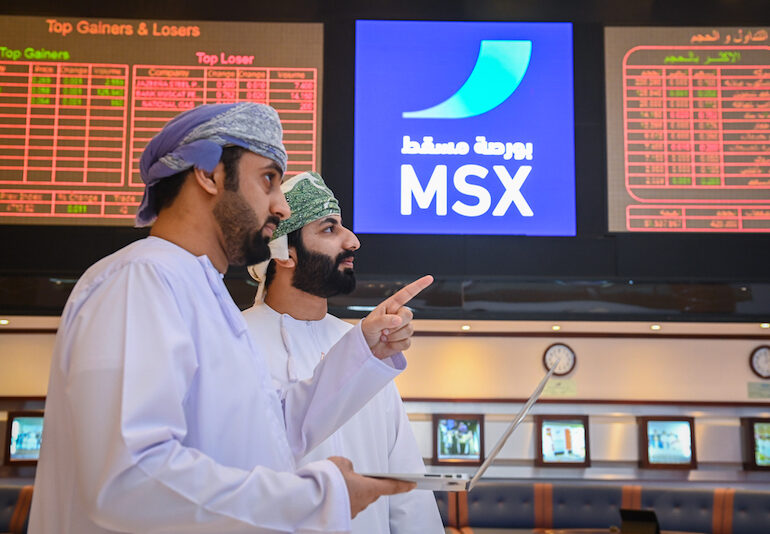
Muscat – Total net profits of Omani banks listed on the Muscat Stock Exchange rose to RO144.3mn in the first quarter of this year, compared to RO130.9mn in the same period last year, reflecting a growth of 10.2%.
Banks recorded stronger earnings during the first quarter, supported by increased government spending, improved economic activity, higher financing for government and private sector projects, and growth in deposits, according to a report by the Oman News Agency.
At the same time, Omani banks continued efforts to improve operational efficiency by expanding digital banking services, diversifying revenue streams, enhancing asset quality, and reducing non-performing loans.
According to the report, all listed Omani banks posted higher net profits in the first quarter except Bank Nizwa, whose profits declined to RO2.6mn from RO4.5mn in the corresponding period of last year.
Bank Muscat recorded the highest net profit at more than RO63.9mn for Q1 2026, up from RO58.5mn in the same period a year earlier.
Sohar International Bank posted one of the strongest increases in profitability, with net profit rising 21% to RO26.1mn from RO21.4mn in the first quarter of last year. National Bank of Oman (NBO) ranked third with RO19.4mn in net profit, followed by BankDhofar at RO13.2mn, Ahlibank at RO10.8mn, and Oman Arab Bank at RO8.2mn.
Financial data released by the local banks showed that total assets increased 13% by the end of March 2026 to RO47.7bn, compared to RO42.2bn in March 2025. Shareholders’ equity also rose 16.4% to around RO7.1bn from RO6.1bn.
Bank Muscat accounted for 32% of the total assets of banks listed on the Muscat Stock Exchange. Its assets grew 7% year-on-year to RO15.3bn by the end of March, compared to RO14.3bn in March 2025. Sohar International ranked second with assets of RO9.6bn, followed by National Bank of Oman with RO5.9bn.
During the first quarter, banks announced several initiatives aimed at improving efficiency, strengthening services, enhancing overall performance, and increasing their contribution to the national economy.
Shareholders of several banks also approved capital increases during extraordinary general meetings (EGMs) held in the first quarter as part of efforts to strengthen financial solvency, expand lending and financing activities, and enhance risk management capabilities.
Bank Muscat EGM approved an increase in the bank’s authorised capital from RO800mn to RO1.2bn. Similarly, BankDhofar shareholders approved a plan to increase the bank’s capital to RO500mn over the next five years.
Meanwhile, Bank Nizwa shareholders approved a proposal to establish a RO60mn sukuk mudaraba issuance programme through four issuances of RO15mn each. Sohar International Bank shareholders approved the issuance of Tier 1 shareholder bonds, mandatorily convertible into shares at maturity, of up to around 259.5mn bonds at an issue price of 102bz per bond. These resolutions remain subject to regulatory approvals.
The strong financial performance of banks during the first quarter was also reflected in their market capitalisation. Total market capitalisation of listed banks rose to RO7.729bn by the end of April, representing gains of around RO2bn compared to the end of last year. The sharp increase in market capitalisation was driven by higher share prices, improved investor sentiment, and expectations of continued growth in banking sector performance amid stronger economic activity and increased government spending.
© 2021 Apex Press and Publishing. All Rights Reserved. Powered by Mesdac