
 By OUR CORRESPONDENT
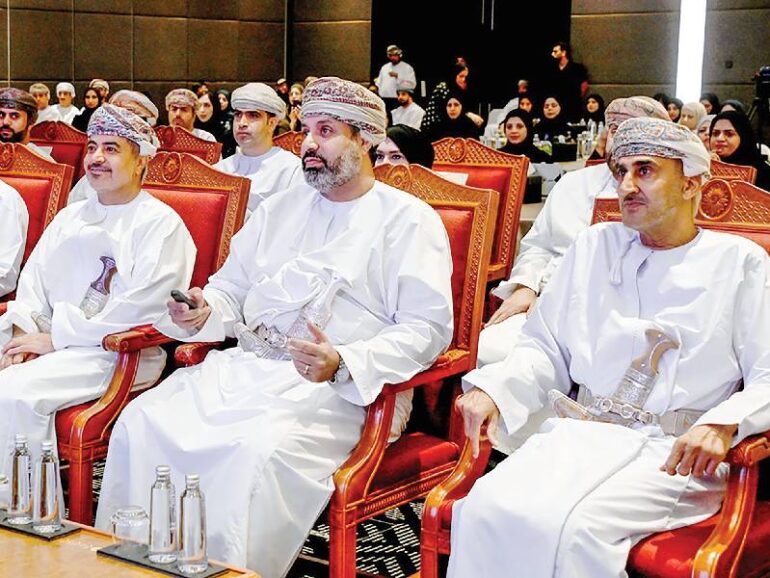
Muscat – Oman on Tuesday launched a national framework for the governance of enterprise risk management, establishing a unified approach to identifying, assessing and addressing risks across civil government entities.
The Ministry of Labour launched the framework in cooperation with the National Risk Register under the auspices of H E Dr Mahad bin Saeed bin Ali Baowain, Minister of Labour. It supports Oman Vision 2040 by promoting common risk management principles and practices, strengthening institutional governance, improving government performance and enhancing preparedness for future challenges.
H E Said bin Abdullah Al Balushi, Undersecretary of the Ministry of Labour for Human Resources Development, said the framework came amid rapid economic, technological and social changes requiring stronger planning and institutional readiness. Its launch coincided with the International Day for Disaster Risk Reduction, observed annually on October 13.
H E Al Balushi said effective risk management would help entities identify threats to strategic plans and projects early, plan resources and skills, prepare for technological and legislative changes, and coordinate responses to shared risks.
The framework shifts the focus from reacting to risks after they occur to identifying potential threats, assessing their likelihood and impact, prioritising responses and monitoring warning indicators. It links risk management with strategic planning, decision-making, performance management and business continuity.
Risks are classified at three levels: institutional risks confined to one government entity; sectoral risks affecting multiple entities within a sector; and national risks extending across sectors or affecting national interests and services. Risks can be escalated when their impact expands or exceeds an entity’s ability to manage them.
The framework covers strategic, regulatory and compliance, reputational, cybersecurity and information technology, project, supplier and third-party risks.
The ministry will support implementation through training, technical assistance and monitoring compliance and institutional maturity. The process will include compliance certificates based on defined standards and an enterprise risk management indicator within the government’s Ejada institutional performance evaluation system.
Implementation will be phased according to each entity’s readiness and responsibilities. The framework aims to make risk management a shared government responsibility, supported by regular reviews and updates to risk registers to detect emerging threats early and help maintain services.
© 2021 Apex Press and Publishing. All Rights Reserved. Powered by Mesdac