 By OUR CORRESPONDENT
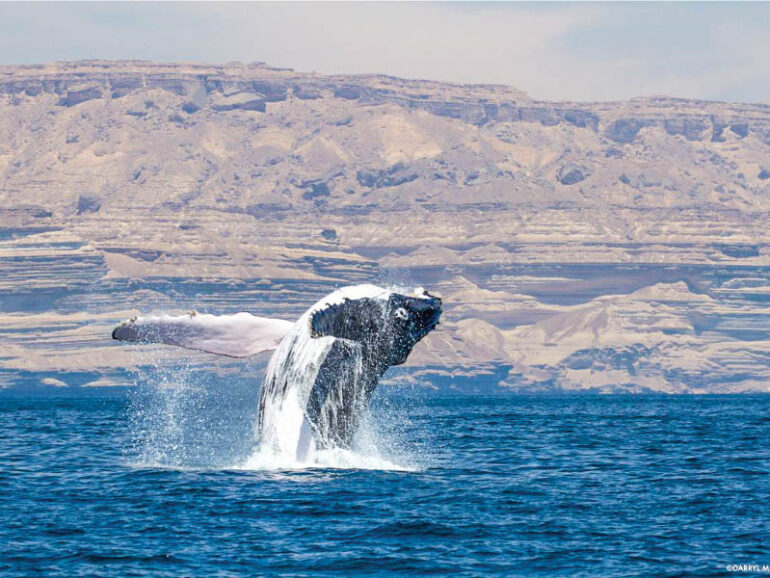
Muscat – They do not undertake the epic migrations associated with most humpback whales. They remain in the Arabian Sea year-round, breed and feed in the same waters and even sing a song found nowhere else.
Now, genetic research led by the Wildlife Conservation Society (WCS) in close collaboration with the Environment Society of Oman (ESO), the Environment Authority of Oman, and other local and international partners, has found compelling evidence that the Arabian Sea humpback whale is a distinct evolutionary lineage, strengthening the case for its recognition as a fourth humpback whale subspecies.
Published in Frontiers in Marine Science, the study analysed mitochondrial DNA from 2,285 humpback whales across the world’s oceans. Researchers found high genetic differentiation between the Arabian Sea population and the three currently recognised humpback subspecies of the North Atlantic, North Pacific and Southern Hemisphere.
The findings indicate very limited gene flow between the populations and suggest that Arabian Sea whales have followed their own evolutionary path for tens of thousands of years.
The research supports the proposed scientific name Megaptera novaeangliae indica, although formal recognition as a subspecies rests with the Society for Marine Mammalogy’s Taxonomy Committee.
“Arabian Sea humpback whales have long been an enigma to the scientific community,” said lead author Dr Rita Amaral. “The results clearly indicate the Arabian humpback whales have followed their own evolutionary trajectory for tens of thousands of years.”
Researchers also examined ancient DNA from a whale specimen described as Megaptera indica in 1883 and held in Paris. Genetic and morphological analysis confirmed it was a humpback whale closely related to today’s Arabian Sea population.
Suaad Al Harthi, Executive Director of ESO and co-author of the study, said the discovery is the latest milestone in more than 25 years of research in Oman. “What began with small-boat surveys to photograph individual whales and collect tiny tissue samples has developed into a much broader programme using satellite tracking, acoustic monitoring, health assessments and other techniques. It is enormously rewarding to see samples collected during those early years now contributing to findings of such international scientific importance.”
But the whales’ isolation also makes them vulnerable. Fishing-gear entanglement, vessel strikes, underwater noise and pollution threaten the population, while climate-driven changes to monsoons and ocean upwelling could affect their food supply.
Researchers say the population remains small, with no evidence of growth over the past two decades, and warn it could face extirpation without concerted conservation measures.
The study calls for regional cooperation and dedicated resources to protect a population described as genetically, ecologically and demographically unique – and the only known humpback population that both feeds and breeds within the same geographic area.
© 2021 Apex Press and Publishing. All Rights Reserved. Powered by Mesdac