 By OUR CORRESPONDENT
Muscat – The water and wastewater sector in Oman is witnessing rapid expansion, with 97 projects currently under implementation at a total value of RO966mn, according to Qais bin Saud Al Zakwani, CEO of Nama Water Services.
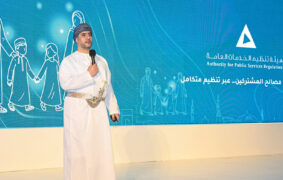
Speaking during a media briefing organised by the Authority for Public Services Regulation on Tuesday, Al Zakwani highlighted the sector’s key developments and growth indicators over recent years.
He said the length of water and wastewater networks has increased by 32%, while the number of treatment plants has grown by 9%, pushing the wastewater treatment rate to 98%.
The number of water quality tests conducted across the network also rose by 74%, while compliance with Omani drinking water standards reached 99.81%, reflecting a high level of monitoring and quality control.
Al Zakwani noted that the 97 projects currently under construction will further expand infrastructure capacity and enhance service efficiency across the sultanate.
He added that the sector has also advanced in digital transformation, improving the accuracy of meter readings and reducing estimated billing.
Developments in energy sector
Meanwhile, Alaa Hassan Mousa Al Lawati, CEO of Nama Distribution Company, reviewed developments in the electricity sector, highlighting the implementation of strategic power generation projects and the shift toward renewable energy.
He said renewable energy accounted for 9.46% of total electricity production by 2025.
In the electricity transmission sector, line lengths increased by 40% and the number of substations by 13%. In the distribution sector, network lengths rose by 13%, while the number of substations increased by 8%.
Al Lawati added that the electricity supply sector has undergone a major digital transformation in billing, rising from 90% electronic billing in 2021 to 100% by 2025, while electronic payment rates climbed to 78% during the same period.
The data reflects developments recorded between 2021 and 2025. The sector has also adopted artificial intelligence and data analytics technologies to enhance the subscriber experience, enabling customers to monitor consumption in real time through smart meters.
Several initiatives were implemented to support service improvements, including enhancing call centre operations, expanding e-services, simplifying bill payment procedures, strengthening electronic integration with government entities, implementing load management projects to improve network efficiency, upgrading subscriber satisfaction measurement systems, and updating websites and applications to provide integrated services.
In the gas transmission sector, Al Lawati noted 3% growth in network capacity, a 5.9% increase in pipeline lengths, and a 22% rise in the volume of gas transported, alongside the implementation of expansion projects and strengthened safety and business continuity standards.
Key projects include the construction of a second 42-inch pipeline between Fahud and Suhar, the gas supply project for Marsa LNG, in addition to initiatives aimed at enhancing safety standards, strengthening business continuity systems, and developing the regulatory asset base framework to support future multi-supplier opportunities.
© 2021 Apex Press and Publishing. All Rights Reserved. Powered by Mesdac