
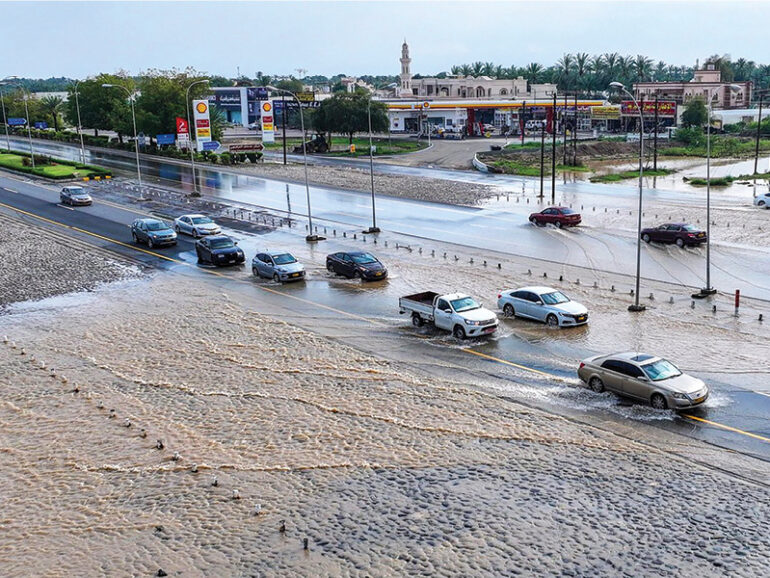
Muscat – The Sultanate of Oman marked World Meteorological Day on March 23, reaffirming its commitment to strengthening weather monitoring and early warning systems to enhance public safety and support sustainable development.
Represented by the National Multi Hazard Early Warning Center at the Civil Aviation Authority (CAA), Oman joined countries around the world in celebrating the occasion, which commemorates the entry into force of the World Meteorological Organization Convention in 1950. This year’s theme, ‘Monitoring Today, Protecting Tomorrow’, highlights the critical role of meteorological and hydrological monitoring in improving weather forecasting and disaster preparedness.
Globally, the day recognises the contributions of meteorological institutions and specialists who work continuously to monitor the Earth’s atmosphere and water systems, advance climate awareness and develop early warning systems to protect lives and property.
At the national level, Oman continues to enhance its meteorological capabilities through an integrated system for monitoring, forecasting and early warning. The system plays a vital role in safeguarding communities, supporting the aviation sector and assisting national development planning.
According to the CAA, Oman Meteorology Services recorded several operational indicators in 2025 reflecting the sector’s expanding role. The number of weather monitoring stations across the sultanate reached 83, while 2,850 special weather bulletins were issued during the year.
In addition, 10,950 Terminal Aerodrome Forecasts (TAF) were produced for the country’s airports, along with 1,460 aviation weather maps, 82 warnings for Omani airspace, and 423 runway-specific warnings.
Officials said these services play a crucial role in supporting civil aviation by providing accurate and continuous weather data that enhances air safety and improves the readiness of airports and air navigation service providers.
Meteorological information also supports other vital sectors, including water resource management, energy planning, infrastructure development, urban planning and disaster risk management.
To strengthen national preparedness, Oman established the National Multi Hazard Early Warning Center in 2004. The centre is among the first specialised facilities in the region to provide comprehensive alerts for natural hazards including tropical cyclones, severe weather events, flash floods and tsunamis triggered by undersea earthquakes.
Operating around the clock, the centre monitors weather conditions and natural hazards and issues alerts through multiple communication channels, including the Oman Meteorology website, text messages, mobile applications, traditional media outlets and social media platforms to ensure timely access to information for the public.
The centre relies on an advanced technological system that includes a nationwide network of monitoring stations, weather radars, satellite data and sophisticated numerical forecasting models, enabling accurate analysis and prediction of weather phenomena.
Significant upgrades have been implemented in recent years under the Muzn strategic programme launched by the CAA for the period 2023–2026 to modernise Oman’s meteorological and early warning systems.
The programme includes projects to expand monitoring stations, enhance weather radar capabilities, develop numerical forecasting systems and databases, and establish advanced digital platforms for delivering meteorological information.
Abdullah bin Rashid Al Khadouri, Director General of Meteorology at the CAA, said these initiatives form part of a strategic vision to improve forecast accuracy and strengthen early warning capabilities.
He noted that the upgrades support public safety and the aviation sector while contributing to the objectives of Oman’s national development plans.
Al Khadouri added that the authority is increasingly utilising modern technologies such as artificial intelligence and big data analytics to support weather forecasting and analyse complex weather patterns, including tracking tropical cyclones in the Arabian Sea and predicting heavy rainfall and flash floods.

© 2021 Apex Press and Publishing. All Rights Reserved. Powered by Mesdac