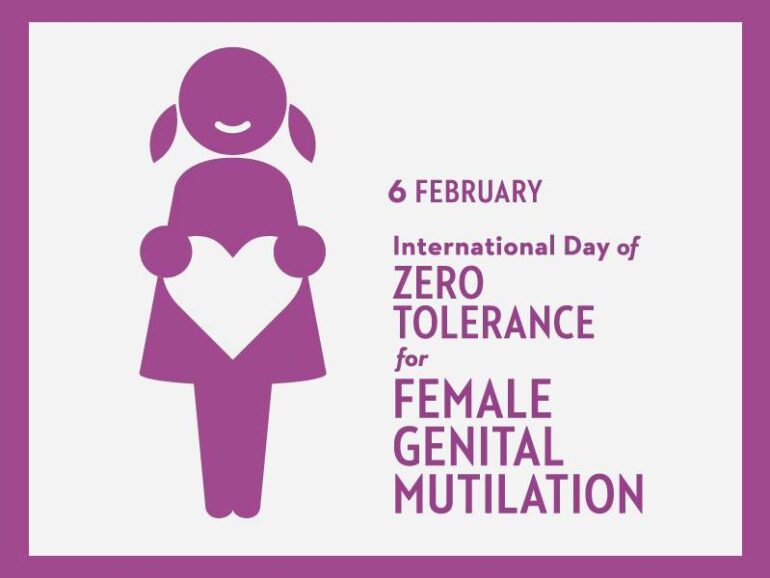
New York, USA – An estimated 4.5mn girls, many under the age of five, are at risk of undergoing female genital mutilation (FGM) in 2026 alone, according to a joint statement by United Nations agencies. More than 230mn girls and women worldwide are currently living with the consequences of the practice.
Marking the International Day of Zero Tolerance for Female Genital Mutilation on February 6, senior UN officials reaffirmed their commitment to end FGM and to ensure access to appropriate services for those affected. The statement was issued jointly by the heads of UNFPA, Unicef, UN Women, World Health Organization, Unesco and the UN Office of the High Commissioner for Human Rights.
The agencies stressed that FGM is a violation of human rights and cannot be justified under any circumstances. They said the practice harms the physical and mental health of girls and women and can result in lifelong complications. Global treatment costs linked to FGM are estimated at about US$1.4bn annually.
The statement noted that efforts over the past three decades are showing results. Nearly two-thirds of people in countries where FGM is prevalent now support its elimination. Progress has accelerated in recent years, with half of all gains since 1990 achieved in the past decade. The proportion of girls subjected to FGM has fallen from one in two to one in three.
However, the agencies said faster action was needed to meet the Sustainable Development Goal of ending FGM by 2030. They added that every dollar invested in ending the practice delivers a tenfold return, with US$2.8bn potentially preventing 20mn cases worldwide.
‘As we approach 2030, gains achieved over decades are at risk as global investment and support wane. Funding cuts and declining international investment in health, education and child protection programmes are already constraining efforts to prevent female genital mutilation and support survivors. Further, the growing systematic pushback on efforts to end female genital mutilation, compounded by dangerous arguments that it is acceptable when carried out by doctors or health workers, adds more hurdles to elimination efforts. Without adequate and predictable financing, community outreach programmes risk being scaled back, frontline services weakened and progress reversed – placing millions more girls at risk at a critical moment in the push to meet the 2030 target,’ the agencies stated.
© 2021 Apex Press and Publishing. All Rights Reserved. Powered by Mesdac