 By HUBERT VAZ
When courage meets current, remarkable stories unfold. As four Royal Air Force officers prepare to row 3,000 miles across the Atlantic Ocean in the world’s toughest endurance race, one of them – Air Commodore Matthew Stowers, Defence and Military Attaché at the British Embassy Muscat – carries with him not just the spirit of adventure, but also a message of resilience and friendship, which he shares with Muscat Daily
Come February 2026, Per Ardua 21 – a prestigious rowing expedition across the Atlantic Ocean – will get underway to commemorate 225 years of enduring ties between the United Kingdom and Oman, celebrating shared values of teamwork, discipline, and perseverance.
Beyond the physical challenge lies a deeper goal – to inspire young people in Oman and beyond, to embrace endurance, purpose, and unity in the face of adversity.
The Atlantic Rowing Race is a premier ocean rowing event where teams row 3,000 miles across the Atlantic Ocean. It is widely regarded as the world’s toughest row, testing physical endurance, mental resilience, and teamwork. The journey across will take up to 44 days.
A team of 4 Royal Air Force officers, including the Defence Attaché Matthew Stowers will undertake this expedition. The crew has spent the last four years in preparation including training, fundraising, and ensuring that they have all the right equipment in place.
In a free-wheeling interview with Muscat Daily, Air Commodore Matthew Stowers, Defence and Military Attaché, British Embassy Muscat, shares some insights into this prestigious Atlantic Ocean challenge. Excerpts:
What inspired the Per Ardua 21 challenge?
In 2004, I embarked on the challenge of rowing the Atlantic Ocean – ‘the world’s toughest row’. Our first crossing was an intense and emotional journey that tested our physical and mental limits. What we anticipated to be a 50 – 60-day adventure, took 78 days. We completed the journey with a single set of oars, a barely functional boat, and emergency rations running low. Despite these challenges, our resolve to complete the journey again was unwavering.
We are now preparing to take on this formidable journey once again, 21 years later, with a new boat and a crew of 4 with an average age of 56 years.
As we approached 225 years of UK-Oman diplomatic relations, we wanted to honour this legacy through something bold and symbolic. Rowing the Atlantic – one of the world’s toughest endurance feats is also a metaphor for the journey of friendship, resilience, and shared purpose that defines our seafaring nations. It is a challenge that demands unity, courage, and perseverance – qualities that resonate deeply with both UK military ethos and the spirit of UK – Oman relations.
What preparations have the crew members done physically and mentally for this journey?
Preparing for a 3,000-mile ocean crossing is a marathon in itself — and ours has spanned nearly four years. Physically, we’ve undergone rigorous training that included strength conditioning, cardiovascular endurance, rowing technique, whilst also ensuring that we didn’t get injury. We each made sure we didn’t do anything today which would stop us training tomorrow. We’ve trained on the boat in all conditions, from calm waters to stormy seas, in an attempt to simulate the unpredictability of what we will face on the Atlantic. Nutrition, sleep management, and recovery have also been essential components of our preparation.
But perhaps even more critical has been the mental preparation. As we are all members of the military we take the role of resilience very seriously. We’ve spent countless hours together – not just training, but talking, reflecting, and building trust. We’ve explored our motivations, our fears, and our shared values. This journey has already taught us that the strength of the team lies not just in the physical, but also in the mental and our ability to support one another through the highs and lows.
What aspects of this challenge most test a team’s resilience and spirit?
We are entered in the world’s toughest row, and it’s called that for very good reason. It’s not just the ocean that will focus us – it’s the relentless nature of the challenge that tests you. It is 24 hours a day for 7 days a week. This takes a physical toll on the body as we will be rowing for weeks on end, battling waves, salt sores, and exhaustion. It’s the psychological strain of isolation, sleep deprivation, and the relentless rhythm of life at sea. There are no rest days, no easy moments. Every mile across the ocean is earned.
What truly tests a team’s resilience is how they respond to adversity together. When equipment fails, when tempers fray, when morale dips – that’s when the spirit of the team is revealed. It’s about communication, empathy, and the ability to stay focused on the task. The ocean is a great equaliser — it doesn’t care who you are or where you come from or what you may have done in the past. It demands humility, adaptability, and unity. And it’s in those moments of shared struggle that the deepest bonds are formed.
Could you share a glimpse into the daily routine at sea?
Life on the boat will be governed by a strict routine which means that our lives will revolve around a strict three hours on, three hours off routine – 24 hours a day, 7 days a week. That means each crew member will row for 12 hours a day, every day, for up to 55 days. Sleep comes in short bursts, meals are freeze-dried, and personal space is virtually non-existent. It’s a rhythm that demands discipline and mental resilience. We’ll listen to music, audio books and remind ourselves why we’re doing this. Humour will be a lifeline. And above all, we’ll lean on each other — because motivation is contagious when shared. Motivation comes from our shared mission, the support of our families and friends, and the knowledge that we’re part of something bigger than ourselves.
What kind of safety, communication, and support systems will back you?
Safety is our top priority. Our boat is equipped with state-of-the-art navigation and communication systems, including GPS tracking, satellite phones, AIS transponders, emergency beacons and the internet. We carry a life raft, personal life jackets and medical kits, and we’ve trained extensively in sea survival and emergency response. Much of this equipment has been bought through the kind support locally of both Renaissance Services and Der’a.
While we’re physically isolated, we’re never truly alone — a network of support is always watching over us. We’ll be in regular contact with race organisers and our support team, who will monitor our progress and provide weather updates. In the event of a serious emergency, rescue protocols are in place – although we hope never to need them. The reality is that once we’re out there, we’re largely self-reliant. But knowing that a network of support is watching over us – from families to colleagues to international partners – gives us strength and reassurance. But we have trained hard and are prepared for whatever the Atlantic Ocean throws at us.
How does this mission symbolise the shared values between the UK and Oman?
It’s a symbolic journey that reflects the enduring partnership between the UK and Oman. For over two centuries, our nations have stood together through peace and conflict, change and continuity.
Endurance is reflected in the long-standing commitment we’ve made to each other. Unity is seen in the collaboration between our people, our institutions, and our cultures. And mutual respect is evident in the way we honour each other’s traditions, aspirations, and contributions. Our nations friendship is not just historical, but living, evolving and resilient.
How does the motto ‘Per Ardua’ reflect both the RAF’s spirit and your personal outlook on this mission?
Per Ardua the motto of the RAF Regiment and means ‘Through Adversity’, which we thought was a fitting name to call our boat. We felt that it perfectly captures the essence of this challenge; it’s about striving beyond limits, embracing hardship, and reaching for something greater. Personally, it resonates deeply as our first boat was also called Per Ardua and we went through adversity on our first crossing.
What message do you hope the youth in Oman will take away from your team’s journey?
I hope young people in Oman see that challenges are not barriers – they are opportunities. That you don’t need to be extraordinary to do something extraordinary. What matters is commitment, teamwork, and belief in a purpose greater than yourself. We want to show that resilience is built, not born. That setbacks are part of the journey, and that growth comes from pushing beyond your comfort zone. Whether it’s in sport, education or in leadership; the principles we will live by on the ocean are the same ones that can guide young people in their own lives. We hope to spark curiosity, courage and a sense of possibility.
Are there any collaborative activities or outreach initiatives planned in Oman to engage students or youth groups?
Yes, we’re working closely with local partners – including schools and youth organisations – to create a series of outreach initiatives. These include talks on resilience and leadership, storytelling sessions, and we hope virtual Q&A events with us while we are at sea.
We hope that we can make the journey both accessible and engaging – not just something to watch from afar, but a learning experience. We want young people to feel connected to the journey, to see themselves in it, and to be inspired to pursue their own challenges with confidence and purpose.
How do you see this experience bridging diplomacy and shared human endeavour?
Diplomacy is ultimately about connection about human interaction. As Defence Attaché, I represent my country formally. But as a rower, I represent shared values, vulnerability, and determination. This expedition bridges the official and the personal, showing that diplomacy can be deeply human.
That duality is powerful. It shows that diplomacy isn’t just about policy — it’s about shared stories, values, and aspirations. This challenge allows us to connect on a human level, to build trust through action, and to demonstrate that international relationships are strengthened not just in boardrooms, but in moments of shared endeavour.
What personal lessons do you anticipate learning from this expedition?
I expect to (re)learn a great deal about humility – the ocean is a relentless teacher and will remind me not to take myself too seriously, which we unfortunately can all do. I’ll also deepen my understanding of leadership under pressure, the power of trust, and the importance of staying present. This journey will stretch me in ways I can’t yet define – that’s exactly why it matters.
Leadership in this context is not about command – it’s about compassion, clarity, and consistency. It’s about showing up, even when it’s hard and it will be incredibly hard at times. Humility will be a constant companion, as nature doesn’t negotiate.
What would success mean to you and your team — beyond reaching the finish line?
Success is about impact. It’s about inspiring others, strengthening bonds, and honouring the legacy of service and friendship. Reaching the finish line is a milestone – but the real victory lies in the stories we share, the lives we touch, and the values we uphold along the way.
If a young person in Oman feels empowered to pursue their dream and our nations feel more connected through this shared story – then we will have succeeded.
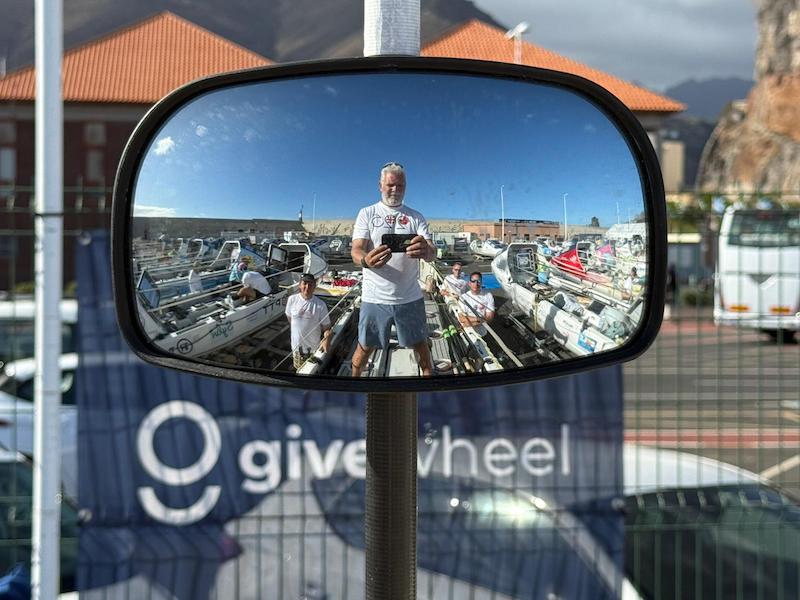
As the oars of Per Ardua 21 slice through the vast Atlantic, they symbolise more than motion — they mark a voyage of shared spirit and steadfast friendship between two nations. For Air Commodore Matthew Stowers and his team, every mile will echo the RAF’s timeless motto: “Per Ardua ad Astra” — through adversity to the stars. Their challenge stands as a reminder that diplomacy too can take many forms — sometimes, it is forged not across conference tables, but upon the restless waves of the open sea.
© 2021 Apex Press and Publishing. All Rights Reserved. Powered by Mesdac