 By HUBERT VAZ
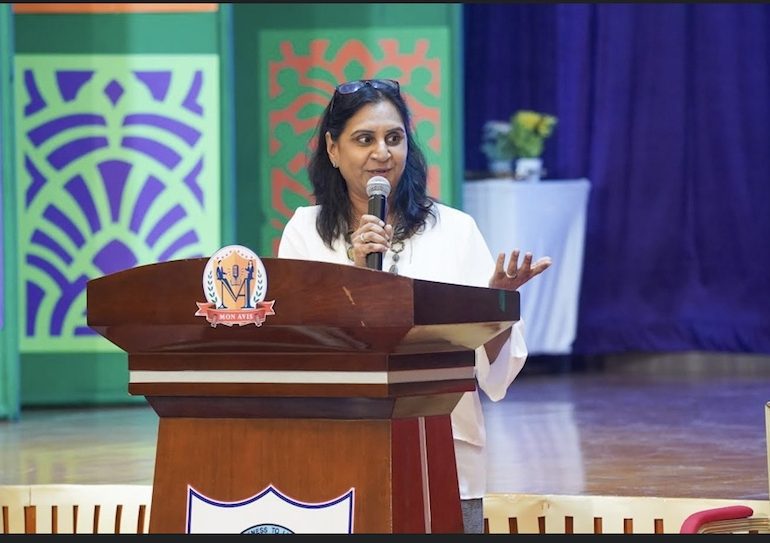
As part of the lecture series ‘From Mandvi to Muscat’, hosted by the Embassy of India, Sandhya Rao Mehta, associate professor, Department of English Language and Literature, Sultan Qaboos University, will be highlighting the role of Indian women in Oman in a lecture titled ‘Empowering Narratives of Indian Women in the Historical Community in Oman’ at 5 pm on March 8 to mark International Women’s Day. In a tete-a-tete with Muscat Daily, she shares the essence of her presentation
What is the theme of your talk and why did you choose this topic?
The theme of my lecture is ‘Empowering Narratives of Indian Women in the Historical Community in Oman’. It aims to focus on the role played by women in the historical Gujarati, Kutchi community which traces its continuous presence in Muttrah, Muscat and Sur for 400 years. This is an area which has hardly been focused on, as the scant work done on the historical Indian community has been on the traders, their role in connecting India and Oman as well as the way in which their roles changed over time. Women have never been the centre of this narrative although many of them accompanied them in their multiple journeys across the Arabian Sea.
This topic was chosen because it adds another element to the rich history of Mandvi-Muscat ties which has been the focus of this lecture series. By focusing on the women, the presentation aims to explore another angle of this history. It is also apt that International Women’s Day (March 8) has been chosen for this specific event.
This presentation is both academic and aimed at the general public. It will use intersectional historiography as an academic framework to understand how to deal with a history which has little tangible evidence in terms of archeological items, listings in public, governmental documents, or trade records. Its methodology is to use oral literature, personal stories and other material evidence such as songs, individual memories and personal photographs to archive the past. It is important to document these narratives before they are lost.
Will you be touching upon the stories of any specific Indian clans in Oman which have played a significant role in nation building from the 70s?
Yes, the focus of this lecture is on the families which made their home more than 300 years ago and have participated in its economy and social life ever since. This includes a number of families who still live around the historical Muttrah area and some who have shifted from there but are still involved with the Gujarati (Bhatia) community as well as with Oman.
How noteworthy has the contribution of women from the Indian community been over the past five decades in Oman?
Indian women have always been present in Oman. They have contributed in many different ways. Whether as doctors, nurses, teachers and in the private sector, Indian women from all over India, not only Gujarat, are very well represented in Oman. In fact, Indian women are still the largest number of professional expatriates in Oman. They have a good presence in the public and private sector, although their numbers in the public sector has been decreasing because of the capacity of young, qualified Omani women who are now participating in the public sector.

Mrs Javerbai and Mrs Madhuri buying vegetables from a vegetable seller near their home, Bait Ratansi, in 1967. (From the private collection of Vimal Purecha)
What were the key area in which Indian women have been actively involved?
The contribution of Indian women in Oman can be seen everywhere. Whether it is in the professional fields like health and education, or the corporate sector, such as Human Resources and IT, Indian women have made a mark in every sector of Omani public life. In addition, there is significant cultural participation, with engagement in the Arts such as painting and sculpting, as well as film making.
There is also active engagement with social activities such as promoting reading through social groups, volunteering with local organisations to offer and facilitate help to those in need, as well as forming unofficial groups of Indians, Omanis and other nationalities who travel together and enhance intercultural understanding. All this is being actively promoted by Indian women in various ways.
How do you view the role of women who accompanied their husbands in Oman and devoted their entire lives for their families and businesses in Oman which contributed to the economy in a big way?
Historically speaking, women who accompanied their husbands to Oman, even 300-400 years ago, contributed in any way they could. Having a stable family gave the traders a sense of place and security. They could involve themselves in their community activities, engage in cultural events, like festivals, and observe rituals unique to their community once they were in a family.

Seth Naraindas Toprani and his wife Shantadevi Toprani on their way to Muscat, circa 1941. (From the private collection of Muneer Toprani)
Women also gave continuity to the Indian merchants who passed on their skills and businesses to the children, many of whom where educated here. Women created homes which are intrinsic to the identity and comfort of every individual. In fact, there is evidence that women also took over family businesses whenever it was necessary, such as in case of family emergencies. Today, we can still see organizations and companies named after the women in the historical families in Oman.
How significant has the contribution of Indian women been in impacting Omani society?
The presentation focuses on three generations of Indian-Kutchi women who live and participate in the Omani cultural life. Their stories serve to document the challenges and inspiration of their lives but also simultaneously document the changes in Omani society as well. Thus, the focus in on women who came Oman much before 1970, those who arrived just around this period, as well as those who presently continue to live and contribute to Oman’s commercial, cultural and professional progress.
Undoubtedly, Indian women’s contributions to Omani society, although not always acknowledged in the public narratives or documents, have been substantial, both in public and personal spaces. This is an area that needs to be explored and researched further in order to recognise and contextualise their role at various levels.
© 2021 Apex Press and Publishing. All Rights Reserved. Powered by Mesdac