Abu Dhabi, UAE – The Gulf Cooperation Council (GCC) nations reaffirmed their full support to the United Arab Emirates’ hosting of COP28 this year.
The council laid emphasis on the importance of this conference for tackling climate change.
The GCC’s statement on COP28 came following an extraordinary ministerial meeting attended virtually on Monday.
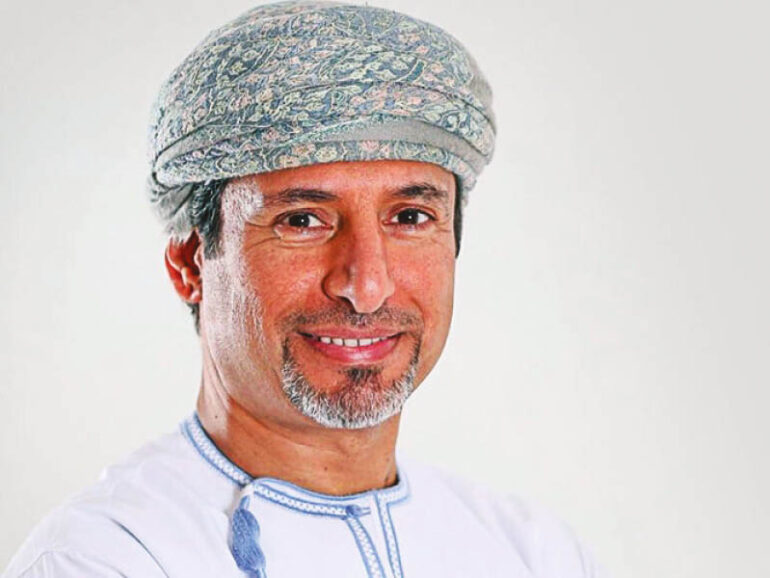
The meeting, called at the request of the UAE, was chaired by H E Salim bin Nasser al Aufi, Minister of Energy and Minerals and Chairman of the National Committee for Climate Change in Oman.
The meeting had the participation of Dr Sultan bin Ahmed al Jaber, UAE Minister of Industry and Advanced Technology and COP28 President-Designate, and several ministers and officials from the GCC states.
The GCC states hailed the appointment of the leadership team for COP28, with Dr Jaber being the COP28 President-Designate; Shamma al Mazrui, UAE Minster of Community Development and the first-ever COP28 Youth Climate Champion; and Razan al Mubarak, the UN Climate Change High-Level Champion.
The council supported the team’s call for coordination, cooperation and joint action for the success of the summit.
They urged all countries and relevant international organisations to actively participate in the conference.
The bloc stressed that the action plan should take into account the negative social and economic impacts on a country, especially those developing countries, which are most vulnerable to such effects.
The GCC nations stressed that COP28 will have to achieve ambitious and balanced negotiated results with focus on the implementation of the Nationally Determined Contributions (NDCs).
During the meeting, the efforts of the GCC countries in combating climate change were highlighted. They include measures, plans, and programmes to ensure environmental, economic, and social sustainability in the region through the circular carbon economy approach, which is a closed loop system involving 4Rs: Reduce, reuse, recycle, and remove.
The GCC countries emphasised the need for COP28 UAE to achieve tangible progress on the Global Goal on Adaptation in the context of the Paris Agreement temperature goal, and the Mitigation Work Programme (MWP).
The council asserted that it must explore all means to address greenhouse gas emissions, regardless of their sources or sectors, by using all technologies and sectors, including renewable energy sources and clean hydrocarbons, and support implementation in accordance with the principles and provisions of the Paris Agreement.
The Paris Agreement principles include operationalising the loss and damage fund and its funding arrangements, and the fulfillment of the pledge to provide US$100bn annually by developed countries to support developing countries, starting from 2020.
© 2021 Apex Press and Publishing. All Rights Reserved. Powered by Mesdac