 By
By
Muscat – Whether smartphones are making individuals smart or dumb can be a different debate altogether. But that this device is making the world smarter is nobody’s doubt.
Smart devices are needed for smart governance and the just held municipal council elections are a pointer towards this direction.
As Sunday’s elections for 11 civic bodies were conducted via smartphones, all ROP services and bank transactions are too being done mostly through e-services – making use of technology that is completely customisable now.
While your phones may be preloaded with apps to help you perform your day-to-day activities efficiently, the increased use of apps has been evident in Oman’s government services.
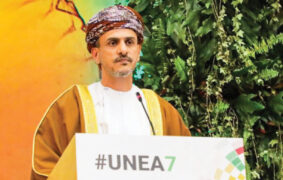
With regards to the municipal council elections, H E Sayyid Hamoud Faisal al Busaidi, Minister of Interior, recently said that the government embarked on the modernisation of election procedures in line with its vision towards digital transition.
“The new high-accuracy application was launched ensuring both secrecy and cybersecurity. This process is fully reliant on artificial intelligence accessible via smartphones to enable the voters from Oman and abroad alike to elect their preferred candidates,” he said.
H E Sayyid Hamoud stressed that both voting and sorting operations contributed to saving time and effort, besides minimising its financial implications.
“The procedures were streamlined for voters, candidates contesting the elections and the supervising committees,” he said.
With e-governance increasingly becoming helpful in the growth story, the concerns of naysayers about ‘too much application’ of technology are found to be not based on reality.
“There is no proof that digital technology or our phones harm our biological cognitive abilities. Smartphones function as an auxiliary tool, which only enhances our horizon to memorise more, to calculate in bigger numbers, to store more information and present them whenever we need them,” said Ata Ali Khan, Partner Equinox, who funds IT companies.
“Additionally, smart technology augments decision making skills that we would be hard pressed to accomplish on our own. Supplemented by technology, we are actually capable of accomplishing much more complex tasks than we could with our abilities,” he added.
Khan, however, from a developer’s standpoint, added, “Today’s developers are using ready frameworks and plug-ins to achieve development goals in a shorter time.
“In order to meet these shorter timelines, newer developers begin coding with framework without having fundamental of code. While the technology does enable a smarter audience, developers are getting dumber by the day.”
Tariq al Barwani, an Omani IT expert, is of the view that phones are getting smarter and not people. “We are not getting smarter but life is getting easier because of technology. Previously phones were dumb but now they are becoming smarter and things are getting easier because of their functionalities. So, things are getting easier now than ever.”
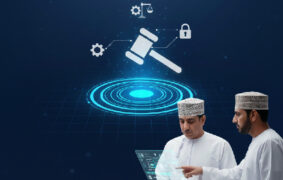
The Ministry of Transport, Communications and Information Technology recently announced that the digital transformation programme (2022) included launching of the first phase of the National Unified e-Government Services Portal, unrolling 88 e-services rendered to citizens and businesses, and streamlining procedures and re-engineering of 70 per cent of basic e-government services.
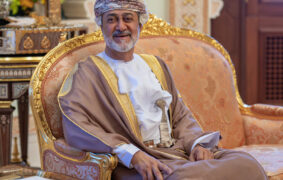
In the context of the Royal Directives to continue boosting digital competence and preparedness and to accelerate the pace of e-government transformation, His Majesty the Sultan during his meeting with the Council of Ministers in December 2020 reaffirmed his constant follow-up of the efforts exerted by the government.
During the meeting, His Majesty directed the speedy implementation of the National Unified e-Government Services Portal to serve as a composite platform incorporating all government services.
© 2021 Apex Press and Publishing. All Rights Reserved. Powered by Mesdac