 By HUBERT VAZ
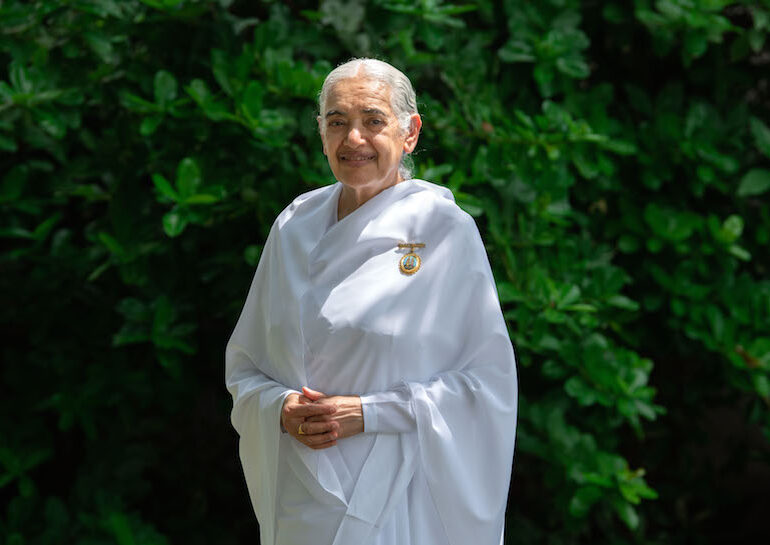
With over five decades of propagating the pursuit of inner peace as a formidable tool for self-refinement and contentment in life, Sr Jayanti is hopeful that the world will eventually become a better place to live in when the masses and the classes both realise that true happiness stems from peace within
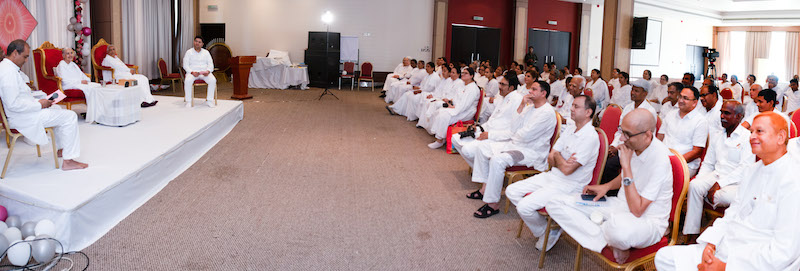
B K Jayanti Kirpalani, European Director of the Brahma Kumaris World Spiritual University from London, who is also a representative of the United Nations, Geneva, is in Muscat to deliver the keynote address at a function to mark UN International Day of Non-violence – the 151st birth anniversary of Mahatma Gandhi – organised by the Embassy of India Muscat, in collaboration with Raja Yoga Centre for Self Development at Sur Ball Room of Hotel Muscat Holiday, in Al Khuwayr, today (Oct 2).
In an exclusive tete-a-tete with Muscat Daily, Sr Jayanti, as she is popularly known, shared a few insights on spirituality, which she believes is founded on inner peace, the pursuit of which is not a difficult task in the modern realm, if one is determined to attain self-refinement. Excerpts:
Over the past five decades of your sharing the essence of inner peace to varied audiences, can you recall some of the most memorable moments which affirmed your own convictions about peace?
I think, it was when we participated in the International Year of Peace in 1986, when the Brahmakumaris proposed a programme in which we would ask people to donate time, not money. We had three options, that they could give minutes of peace through prayer, meditation, or simply though good wishes. The undersecretary in charge of the Peace Studies unit was very happy and the project reached 86 countries and it became the largest non-fund raising project for the United Nations for the Year of Peace. And the Brahmakumaris received seven peace messenger awards for that. So, it was a beautiful thing to see how people recognise what was valuable be able to experience inner peace. We raised over a billion minutes of peace – that was very memorable for me.
Another memorable moment was a very personal experience in the 70s when we were driving from Haridwar to Delhi (in India) early in the morning. The taxi in which we were travelling accidentally hit an old man who wasn’t sure while crossing the road. The villagers came down heavily on the driver and could’ve killed him in their rage. It was then, I intervened to protect him and appealed to maintain peace till the police arrived. Surprisingly, at that moment, there was an amazing sense of peace that surrounded everyone till the police came in. So this was another experience that showed that inner peace can be instrumental even in stopping external violence.
On the same journey, can you recall some darker moments – of disillusionment, dilemmas or confusion about your own resolve?
Actually, there were moments when I looked at my own inner weaknesses and felt that I didn’t have the strength to cope with them – whether it was my attachment to people or situations when I was trying to make things happen and it seemed to be getting blocked. But, I realised, that there must’ve been my own desire that this should happen, and may be that was the block. Though it was intended for the service of others, it might not have been God’s plan. But it did turn out well later on. Anyway, in both of these times I did feel ‘I don’t know what to do, I don’t know how to manage things’. And then I would feel God’s power reaching me and enabling me to move on. Through meditation I could feel God’s love reaching me. And its not just me, anyone who can establish that connection with God can experience His love in many ways.
With an understanding that the pursuit of inner peace is the true essence of spirituality, could you share some insights on:
Inculcating spirituality at home
If parents start to learn to meditate, then they become aware of the qualities of love, peace, truth, which are present in all individuals. If parents are more more loving and generous with their time, then the young ones also benefit from that sustenance. And then young ones can also learn to meditate. Definitely, there are huge benefits if the whole family learns to meditate. For spirituality, it is the ability to go deep into the self, and that is what meditation is all about, to be able to develop a deep relationship with the divine. So, the interaction between family members becomes more spiritual and loving, and so everyone benefits from it.
It is important for families to set aside some time in a day for meditation in silence – it could be at the start of the day, even at the breakfast table, just a few minutes of coming together in silence with their hearts and minds. They say, ‘A family that prays together, stays together’, so evening meditation, too, is helpful. Also, having meals together allows for an informal exchange to take place
Spirituality at the workplace
Many big multinationals, these days, are actually creating a space at the workplace where people can come together to reflect or meditate, and it has been proving beneficial in getting a better output or commitment from employees. So, if people have a space where employees can meditate when they come in the morning, or at lunchtime, that creates a lovely atmosphere.
A lot of work hours/days are lost through absenteeism because of stress and stress-related disorders, so here meditation can help in calming people so that they can work better. When an employee is less stressed, then the decisions he/she makes will be effective rather than those made with confusion. And with meditation a spirit of cooperation comes in rather than conflict and confusion. Hence, meditation at the workplace is beneficial for the employer as well as the employee.
Spirituality in the community/society
When there is spirituality in the community, then you begin to see each one as a member of your family – you don’t see people as Hindu or Muslim or Christian. You see everyone as a sister or brother and that changes the environment in the community very quickly. Whatever our beliefs may be, whatever the colour of our skin may be, if we connect with human beings and the soul, then there is a relationship which is an eternal bond. And so its a bond based on that goodness and pure respect and love.
The other thing is, on an individual level, if I’m practising meditation, the inner goodness within me can emerge and I can share these qualities within my community in whichever way I can, by thoughts, words or action.
If we look back at our Covid days, how many people cooked at home and provided food to others in need or to a central point for distribution. So, across the world, compassion was being expressed in many different ways in the community. It’s interesting that the word for the pandemic was ‘corona’ which is similar to the word in Hindi – ‘Karuna’ which means compassion. So, outpouring from individuals did go a long way in strengthening the hands of governments.
Why has the community environment changed so much these days that people are overcome by fear and insecurity as they move around?
There’s a huge amount of violence and aggression that has come into the world. And its based on fear. When there’s inner fear, people indulge in violence and it also has its roots in insecurity. If I put myself in one particular box, I feel insecure and scared of those in another box. But, if I am secure with my spiritual identity, I am able to have respect for everyone and there is no room for violence or aggression. The world today has moved so much into consumerism that we have lost contact with that inner peace and joy.
Expatriate life in the Gulf revolves around the pursuit of a ‘better life’. Do you see any conflict between this and the pursuit of true happiness?
Yes, I do see a conflict. But I think, a person who realises that there is more to life than just money – and many expatriates do realise that money isn’t everything – he/she does understand that truth, love, peace is important and I don’t think they reject that. There are many individuals here who have realised the importance of spirituality and they want to tell their families about it, too. There are many families in India, who I know of, who have their male members working abroad, yet they do have a good bond of spirituality. Happiness is a deep feeling of contentment.
Do you have any specific message for today’s youth?
The youth have this amazing capacity of energy and hope for the future and creative intellect, plus they have all the tools of technology which older folk aren’t used to. They need to use all of these tools and their creativity for something worthwhile.
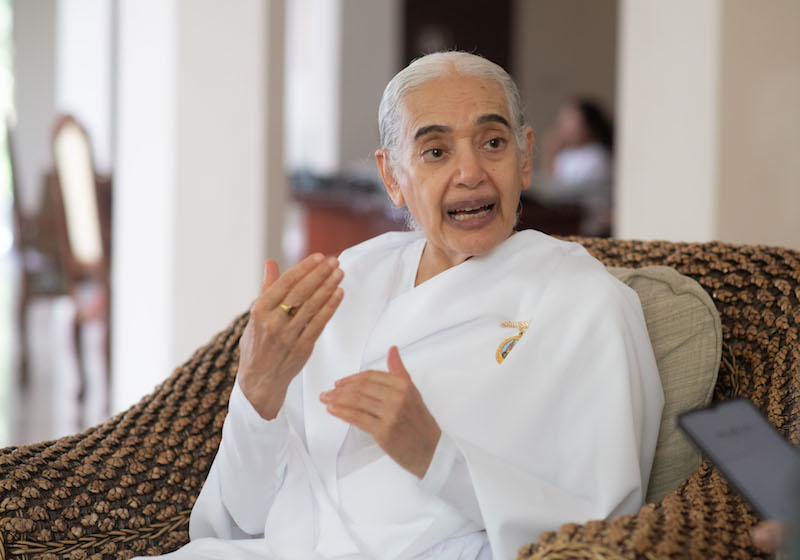
Personal effects
My greatest joy – Experiencing God
My greatest fear – Suffering dementia
A book I’d like to read again – Can’t instantly recall
A city I love – I love the atmosphere of Mumbai but also the serenity of Mount Abu
My favourite food – Salads
I dream often about – Travel. I travel a lot, so it also comes in my dreams
I am hopeful about – Not just my hope, it’s also my faith, that there will be a better world someday in which everyone will experience peace
© 2021 Apex Press and Publishing. All Rights Reserved. Powered by Mesdac