 By
By
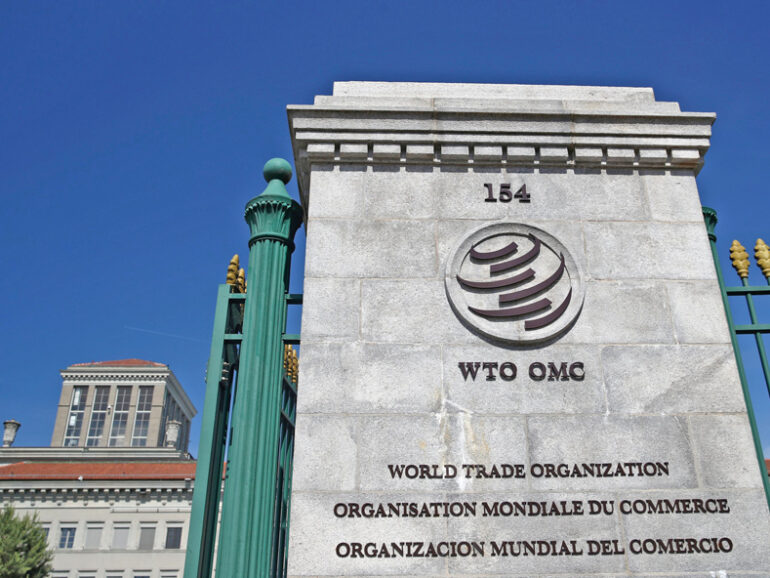
Muscat – The World Trade Organisation’s (WTO) members commended Oman for its open trade and investment policies and improvements in investment environment during the sultanate’s third Trade Policy Review at the WTO headquarters in Geneva, Switzerland.
“Members commended Oman on its generally overall open trade and investment regime. They observed that Oman had generally low tariffs and few non-tariff barriers to trade,” WTO chairperson said in a statement on the successful conclusion of Oman’s third Trade Policy Review.
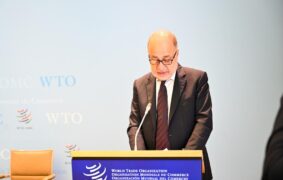
The third review of Oman’s trade policies and practices took place on November 17 and November 19 in Geneva, which was attended by Omani delegation led by H E Qais bin Mohammed al Yousef, Minister of Commence, Industry and Investment Promotion.
As a member of the GCC Customs Union, WTO noted, Oman applies a common external tariff, and common legislation on customs procedures, valuation, and contingency measures.
WTO members also commended Oman for its strong commitment to the multilateral trading system and its active WTO participation, including for the sultanate’s engagement in the negotiations on fisheries subsidies.
Members also congratulated Oman for ratifying the Trade Facilitation Agreement and for having officially implemented 100 per cent of its commitments under the agreement since 2020.
At the same time, several WTO members encouraged Oman to join Joint Statement Initiatives, notably on e-commerce and domestic services regulation, and to become party to the Government Procurement Agreement (GPA).
Many members, as per WTO statement, also recognised Oman’s participation in regional integration, such as the Gulf Cooperation Council and the Pan-Arab-Free Trade Area.
Improving investment environment
WTO members congratulated the sultanate for its improvements towards a stable investment environment. In particular, they applauded Oman for the adoption of the Commercial Companies Law and the new Foreign Capital Investment Law adopted in 2020, and specifically for the abolition of foreign ownership limits.
Members noted that Oman’s reforms related to foreign capital investment, privatisation, public-private partnerships, and bankruptcy, had improved the business environment and led to higher inflows of foreign investment.
‘However, remaining investment regulations on inspection and monitoring procedures, as well as the prohibition of land ownership by foreigners were seen as potential obstacles to a higher inflow of foreign direct investment,’ WTO statement added.
WTO said its members recognised the double challenge arising from low oil prices and the COVID-19 pandemic that Oman faced during the review period. Members were generally pleased with the policy measures taken by Oman to mitigate the impact of the pandemic, particularly on the most vulnerable in the society.
‘Members were also pleased to know that the sultanate’s economy had begun to recover in 2021. In the context of the COVID-19 pandemic, many members were interested in learning more about Oman’s recently adopted practice of approving so-called direct imports from certain countries, versus imports that arrive in Oman with an intermediate stop, to speed up the clearance process and reduce costs,’ WTO said.
‘Developed country status by 2040’
WTO members, as per the statement, recalled that the diversification away from hydrocarbons had remained a top priority for Oman and encouraged it to continue this policy in the future. They wished to know more about Oman’s efforts of diversification and digital transformation.
‘In this context, many members welcomed the launch of ‘Vision 2040’ and the long-term goals included in the 10th Five-Year Development Plan. They strongly believe that the twelve national priorities and their performance indicators would help Oman achieve a more diversified and sustainable economy in the long run, and could help Oman achieve developed country status by 2040,’ WTO said.
With regard to Oman’s diversification plans, many WTO members underlined the need for a further reduction of state ownership though privatisation.
On sectoral policies, some WTO members wished to learn more about incentives for the agricultural sector, and how challenges such as declining soil quality as well as scarcity and salinisation of irrigation water could be overcome.
With regard to the tourism sector, some members mentioned that this sector could be key to the diversification programme and a source of significant employment. Given Oman’s geographic location, the potential of transport and logistics for economic diversification was also highlighted.
© 2021 Apex Press and Publishing. All Rights Reserved. Powered by Mesdac