When a group of soldiers stormed Benin’s state broadcaster on Sunday to announce a coup, panic spread among citizens and across West Africa. Fears mounted that another democracy had fallen.
The swift response by Benin’s Armed Forces brought relief, but analysts remain concerned.
“In the past three or four years, images such as this of soldiers bursting in front of national TV have become commonplace in most of West Africa, a sub-region that for two or three decades had seen considerable progress in terms of democratic governance,” said Christopher Fomunyoh of the National Democratic Institute, based in Washington DC.
The last coup in Benin occurred in 1972. Since then, the country has been hailed as a model of democratic progress. So, what triggered this attempted overthrow – especially in the light of general elections scheduled for April?
Disgruntled military men seek change
The soldiers said their actions were driven by the deteriorating security in northern Benin, alleging ‘unfair promotions’ within the army, and the government’s ‘disguised questioning of fundamental freedoms’.
Political analyst Regis Hounkpe dismissed these claims.
“A military coup d’etat is not and will never be a solution, whether you are in Benin or elsewhere. Benin today is living its democratic trajectory, with its flaws but also with its successes. We are a country in the midst of a socio-economic structural transformation,” he told DW.
Security analyst Beverly Ochieng questioned why the plotters didn’t wait for next year’s elections, and warned of dire consequences had the coup succeeded.
“By suspending institutions, you are withholding that election from taking place, delegitimising the process, and creating more public mistrust in a process,” she told DW.
Constitutional reforms
Last month, Benin’s parliament approved constitutional reforms extending presidential and legislative terms from five to seven years, while maintaining the two-term limit. President Patrice Talon is expected to step down after next year’s elections.
The reforms also propose creating a Senate with 25 to 30 members, including former heads of state and presidential appointees. These changes await Constitutional Court approval.
Opposition groups have expressed discontent, and Ochieng says the coup plotters tried to exploit these grievances.
“They (coup plotters) talked about Talon’s alleged mismanagement of the country, the repression of the opposition,” she tells DW, adding: “(It) seemed as if they were trying to reach out to as many other people as possible in terms of expressing grievances that have been ongoing in the country, some of which have been minimised either through the consolidation (of) power by Talon himself.”
Who was behind the coup?
The coup plotters, calling themselves the Military Committee for Refoundation, were led by Lieutenant Colonel Tigri Pascal, reportedly close to former President Thomas Boni Yayi. However, Ochieng noted: “There were no clear links between the attempt on power and the former leaders and opposition.”
Nigeria confirmed it was deploying troops to assist Benin’s forces in foiling the coup. ECOWAS has also sent troops to stabilise the situation.
“It is really unfortunate that we are returning to an era of military coups and counter coups,” Fomunyoh said.
“We know Benin has been a lead country with regards to democratisation efforts in West Africa, and the Benin citizens have learnt to take their grievances through political processes.”
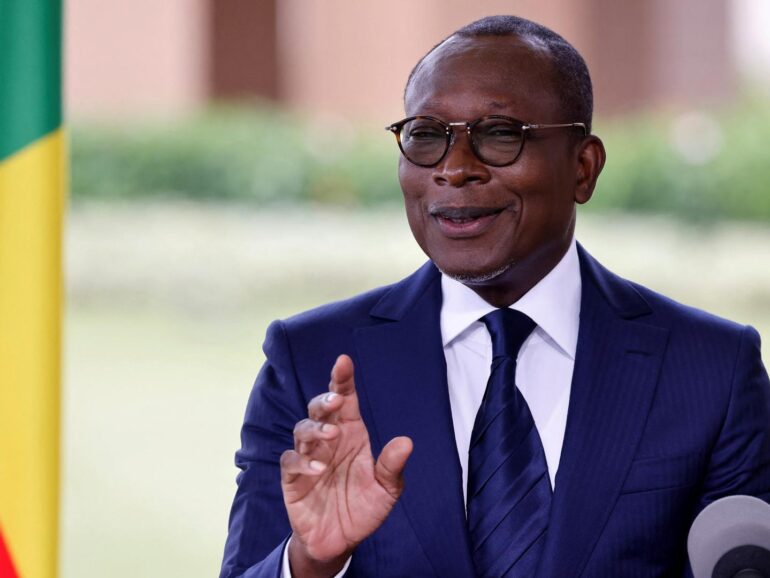
President Talon appeared on national television hours later, assuring citizens the situation was under control and praising the army: “We stood firm, retook positions until we cleared the last pockets of resistance from the mutineers. This commitment and mobilisation allowed us to defeat these adventurers and avoid the worst for our country. This crime will not go unpunished.”
What next for Benin?
Analysts say Talon’s handling of the crisis and the lead-up to elections will be critical.
Fomunyoh said: “My sense is now that the military has had the upper hand and President Talon is back in charge, he is going to find some way to settle scores. It would be most unfortunate if the situation is handled in a way that further exacerbates tensions within the military.”
Meanwhile, security analyst Ochieng anticipates uncertainty: “We’re likely to see additional people being arrested in connection with this coup attempt, people who may have backed the so-called coup leader.”
Fomunyoh stressed the need for democratic processes and that steps ‘are taken with full respect to the rule of law’.
A troubling trend in West Africa
Analysts warn that recent events in Benin reflect a broader democratic backslide in West Africa.
Mali, Burkina Faso, and Niger remain under military rule, with no indication of a swift return to constitutional governance.
Just last month, Guinea-Bissau joined this growing list after soldiers seized power hours before the official announcement of election results.
“We’ve seen that a lot of the aspirations of West Africans to be governed justly have not been met by the poor performance of some leaders,” Fomunyoh said.
“So, there is a level of frustration within society, and that’s why sometimes, when these coups happen, citizens are either indifferent or applaud.”
DW
© 2021 Apex Press and Publishing. All Rights Reserved. Powered by Mesdac